composition of the blood
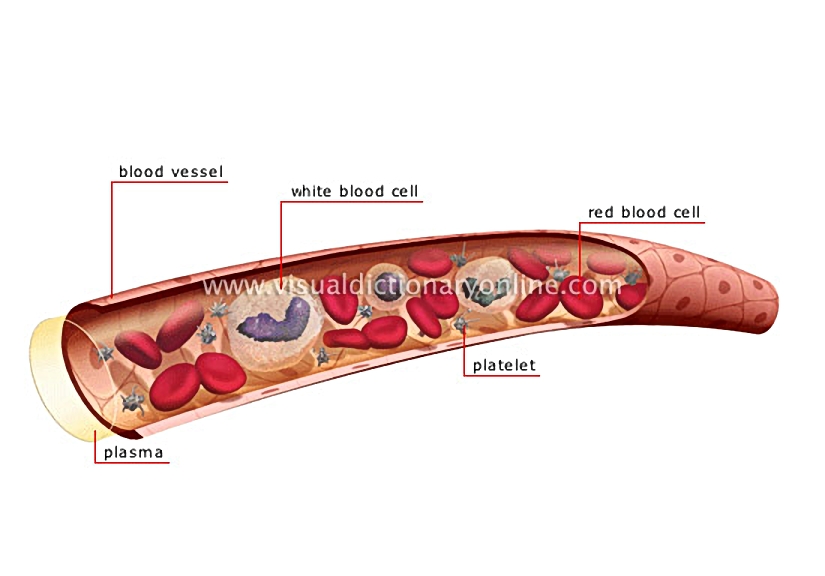
Blood is made up of an aqueous liquid (plasma) in which solids (blood cells, platelets) are suspended. It accounts for 7% to 8% of the body’s weight.
platelet
Blood cell that causes the blood to coagulate, preventing hemorrhaging.
blood vessel
Membranous canal through which blood circulates in the organism; blood vessels form a network about 90,000 mi long.
plasma
Liquid part of blood consisting especially of water, mineral salts and proteins; it allows elements such as nutrients and waste to circulate in the blood.
white blood cell
Blood cell that plays an essential role in the body’s defenses (destruction of infectious agents, production of antibodies).
red blood cell
Blood cell that transports oxygen and contains a pigment (hemoglobin); red blood cells are the most numerous.
 previous

