steps in production of electricity

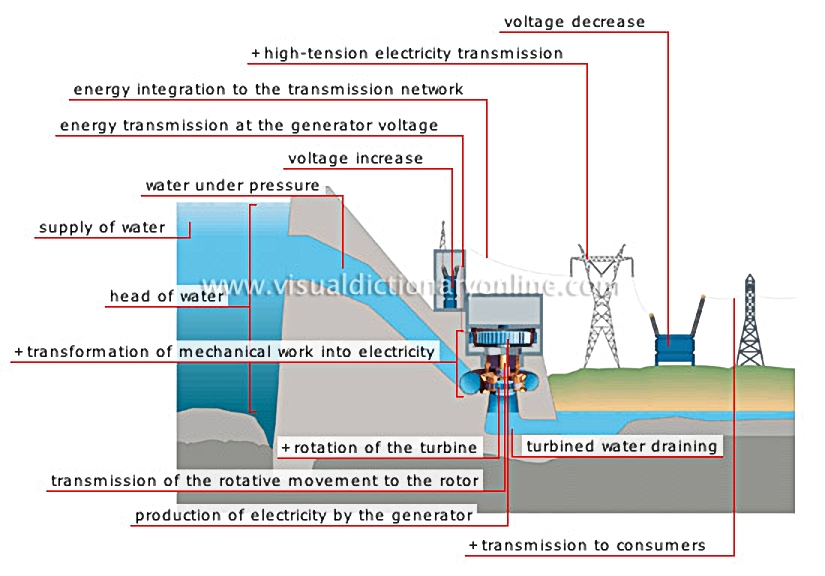
In a hydroelectric power plant, water is turned into electricity, which is carried to consumers along a transportation and distribution network.
steps in production of electricity 						After passing through the turbine, the water rejoins the watercourse.				  							The electricity is carried to areas of consumption by low-voltage distribution lines.												Before integrating the electricity into the distribution network, the voltage is progressively decreased to 240 V.				  							Using high-voltage lines to transmit electricity over long distances reduces the strength of the current and, as a result, energy losses.				  							The dam raises the water level to create a vertical drop along the length of the penstock.				  							The water takes on energy as it flows down the penstock and is carried with force to the turbine.				  							The generator converts water power into electricity.												The movement of the turbine is transmitted to the rotor by the shaft.				  							Flowing water applies pressure to the turbine’s blades to make it turn.												The generator produces electricity through the movement of the rotor in the stator.				  							The electricity produced is integrated into the network.				  							At the outlet end of the power plant, the transformer increases the voltage; this reduces energy losses during transmission over long distances.				  							Electric power produced by the generator is transmitted to a transformer at the power plant outlet.				  							Basin created by building a dam, which holds back a large volume of water.
See Also


overhead connection

network connection

generator unit

hydraulic turbine

cross section of a hydroelectric power plant

hydroelectric complex

turbined water draining

After passing through the turbine, the water rejoins the watercourse.

transmission to consumers

The electricity is carried to areas of consumption by low-voltage distribution lines.
overhead connection
overhead connection
network connection
network connection

voltage decrease

Before integrating the electricity into the distribution network, the voltage is progressively decreased to 240 V.

high-tension electricity transmission

Using high-voltage lines to transmit electricity over long distances reduces the strength of the current and, as a result, energy losses.

head of water

The dam raises the water level to create a vertical drop along the length of the penstock.

water under pressure

The water takes on energy as it flows down the penstock and is carried with force to the turbine.

transformation of mechanical work into electricity

The generator converts water power into electricity.
generator unit
generator unit

transmission of the rotative movement to the rotor

The movement of the turbine is transmitted to the rotor by the shaft.

rotation of the turbine

Flowing water applies pressure to the turbine’s blades to make it turn.
hydraulic turbine
hydraulic turbine

production of electricity by the generator

The generator produces electricity through the movement of the rotor in the stator.

energy integration to the transmission network

The electricity produced is integrated into the network.

voltage increase

At the outlet end of the power plant, the transformer increases the voltage; this reduces energy losses during transmission over long distances.

energy transmission at the generator voltage

Electric power produced by the generator is transmitted to a transformer at the power plant outlet.

supply of water

Basin created by building a dam, which holds back a large volume of water.