hydroelectric complex

The reservoir structures and installations that use water power to produce electricity.
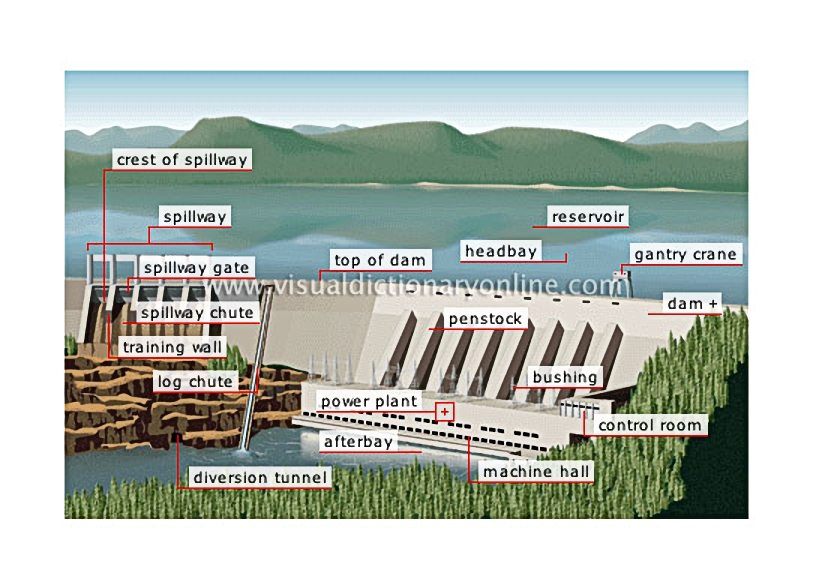
hydroelectric complex 						Movable vertical panel; it is opened to allow the reservoir’s overflow to pass through.				  							Cement crest over which the reservoir’s overflow discharges when the spillway gates are opened.				  							Area that houses the generator units used to produce electricity.				  							Plant that uses an energy source, here water, and converts it into electricity.												Underground conduit that diverts water during construction.				  							Wall that separates the spillway chutes; it is used to direct the water flow.				  							Inclined surface along which discharged water flows out.				  							Area of the watercourse where water is discharged after passing through the turbines.				  							Device that allows the conductor to pass through the wall of the transformer and separates it from the latter.				  							Barrier built across a watercourse in order to build up a supply of water for use as an energy source.				  							Area that contains the various control and monitoring devices required for the production of electricity.				  							Structure that allows floating wood to travel from upstream to downstream of the dam.				  							Hoisting device in the form of a bridge; it moves along rails.				  							Basin formed by the construction of a dam; it holds back a very large volume of water so that the flow rate can be controlled.				  							Channel that discharges excess water from the reservoir during flooding to avoid submerging the dam.				  							Upper part of the dam; it rises above the water level of the reservoir by several yards.				  							Part of the reservoir immediately in front of the dam where the current originates.				  							Channel that carries water under pressure to the power plant’s turbines.
See Also


steps in production of electricity

cross section of a hydroelectric power plant

spillway gate

Movable vertical panel; it is opened to allow the reservoir’s overflow to pass through.

crest of spillway

Cement crest over which the reservoir’s overflow discharges when the spillway gates are opened.

machine hall

Area that houses the generator units used to produce electricity.

power plant

Plant that uses an energy source, here water, and converts it into electricity.
cross section of a hydroelectric power plant

diversion tunnel

Underground conduit that diverts water during construction.

training wall

Wall that separates the spillway chutes; it is used to direct the water flow.

spillway chute

Inclined surface along which discharged water flows out.

afterbay

Area of the watercourse where water is discharged after passing through the turbines.

bushing

Device that allows the conductor to pass through the wall of the transformer and separates it from the latter.

dam

Barrier built across a watercourse in order to build up a supply of water for use as an energy source.

control room

Area that contains the various control and monitoring devices required for the production of electricity.

log chute

Structure that allows floating wood to travel from upstream to downstream of the dam.

gantry crane

Hoisting device in the form of a bridge; it moves along rails.

reservoir

Basin formed by the construction of a dam; it holds back a very large volume of water so that the flow rate can be controlled.

spillway

Channel that discharges excess water from the reservoir during flooding to avoid submerging the dam.

top of dam

Upper part of the dam; it rises above the water level of the reservoir by several yards.

headbay

Part of the reservoir immediately in front of the dam where the current originates.

penstock

Channel that carries water under pressure to the power plant’s turbines.