refinery products

Refining of crude oil yields hundreds of useful products.
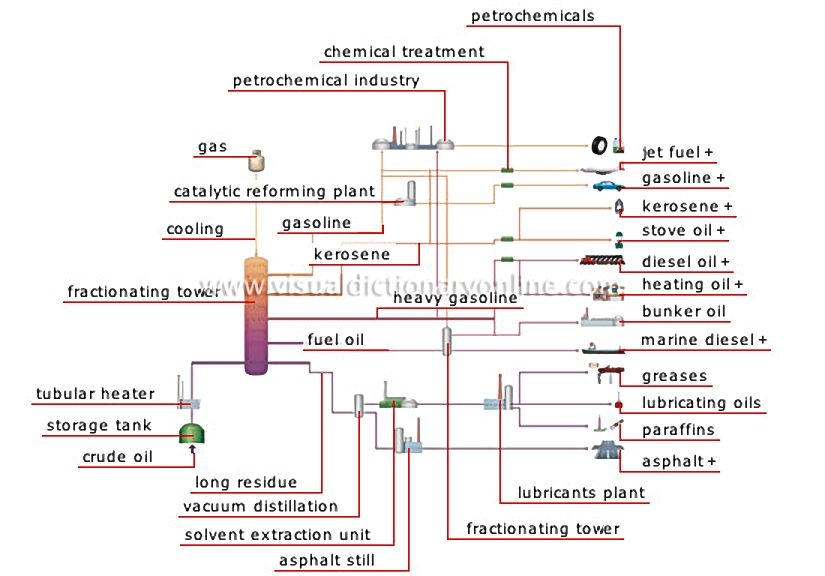
refinery products 						Water-insoluble substances that have various uses; these include candle making, packaging and pharmaceutical products.				  							Mixture of bitumen and other substances that is used mainly to pave roads.												Viscous substances that are used mainly to reduce friction between two moving surfaces.				  							Pasty substances made of mineral oil and soap; they are used by industry to lubricate mechanical parts.				  							Fuel especially designed for ships.				  							Fuel used in high-powered heating systems and electric power plants; it is also used to power large diesel engines.				  							Fuel used in home heating systems and industrial installations requiring little energy.												Fuel used mainly by the transportation industry to power diesel engines.												Fuel used for lighting and heating.				  							Motor fuel that is used mainly by the automotive industry to power internal combustion engines.				  							Fuel used mainly in home furnaces.												Aviation fuel used to power jet engines.												Chemical products derived from petroleum-based products; they are found in fertilizers, detergents, plastics and other products.				  							Operation that improves the gasoline derived from crude oil by adding chemicals and mixing in kerosene to obtain jet fuel.				  							Large-capacity covered cylinder that is usually made of steel; crude oil is stored in it to maintain a constant rate of refining.				  							Plant where bitumen (petroleum’s heaviest fraction) is treated and mixed with other substances to yield asphalt.				  							Treatment that is used to separate out heavy residues at the bottom of the tower at low boiling temperatures.				  							Plant where base oils are treated (including the extraction of paraffin and the injection of additives) to obtain various lubricants.				  							Plant that uses a solvent to remove impurities from base oils yielded by vacuum distillation.				  							Natural mineral oil that is made up of various hydrocarbons; it has been extracted from an oil deposit and not refined at all.				  							By-product of the fractionation of crude oil that is chemically treated to provide motor fuels and specialized fuels.				  							By-product of the fractionation of crude oil that is chemically treated to provide various lighting and heating fuels.												Column used to separate fuel oil into its various fractions by vaporization and condensation to obtain various motor fuels.				  							By-product of the fractionation of crude oil; after treatment, motor fuels and specialized heating fuels are derived from it.				  							Residue made up of heavy nonvaporized fractions; it accumulates at the base of the fractionating tower after the hydrocarbons have been separated.				  							Furnace with tubes that heats the crude oil to partially convert it to vapor before it enters the fractionating tower.				  							Column used to separate crude oil into its various fractions according to their boiling points; the light fractions rise to the top of the column.				  							Light fraction yielded by the first petroleum distillation; it is used mainly as motor fuel.												Operation that cools the vapor at the top of the tower (condensation) in order to separate out hydrocarbons such as butane and propane.				  							Plant that treats petroleum-based raw materials (crude oil and natural gas) to obtain marketable chemical products.				  							By-product (butane, propane) of the refining of crude oil; it is used as fuel in the home and as motor fuel.				  							Treatment plant for gasoline products extracted from crude oil; it alters their molecular structure to increase their octane number.

See Also


cross section of a road

boiler?[1]

diesel engine cycle

propane or butane accessories?[1]

turbofan engine

gasoline pump

flammable

paraffins

Water-insoluble substances that have various uses; these include candle making, packaging and pharmaceutical products.

asphalt

Mixture of bitumen and other substances that is used mainly to pave roads.
cross section of a road

lubricating oils

Viscous substances that are used mainly to reduce friction between two moving surfaces.

greases

Pasty substances made of mineral oil and soap; they are used by industry to lubricate mechanical parts.

marine diesel

Fuel especially designed for ships.

bunker oil

Fuel used in high-powered heating systems and electric power plants; it is also used to power large diesel engines.

heating oil

Fuel used in home heating systems and industrial installations requiring little energy.
boiler [1]
boiler [1]

diesel oil

Fuel used mainly by the transportation industry to power diesel engines.
diesel engine cycle
diesel engine cycle

kerosene

Fuel used for lighting and heating.

gasoline

Motor fuel that is used mainly by the automotive industry to power internal combustion engines.

stove oil

Fuel used mainly in home furnaces.
propane or butane accessories [1]

jet fuel

Aviation fuel used to power jet engines.
turbofan engine
turbofan engine

petrochemicals

Chemical products derived from petroleum-based products; they are found in fertilizers, detergents, plastics and other products.

chemical treatment

Operation that improves the gasoline derived from crude oil by adding chemicals and mixing in kerosene to obtain jet fuel.

storage tank

Large-capacity covered cylinder that is usually made of steel; crude oil is stored in it to maintain a constant rate of refining.

asphalt still

Plant where bitumen (petroleum’s heaviest fraction) is treated and mixed with other substances to yield asphalt.

vacuum distillation

Treatment that is used to separate out heavy residues at the bottom of the tower at low boiling temperatures.

lubricants plant

Plant where base oils are treated (including the extraction of paraffin and the injection of additives) to obtain various lubricants.

solvent extraction unit

Plant that uses a solvent to remove impurities from base oils yielded by vacuum distillation.

crude oil

Natural mineral oil that is made up of various hydrocarbons; it has been extracted from an oil deposit and not refined at all.

heavy gasoline

By-product of the fractionation of crude oil that is chemically treated to provide motor fuels and specialized fuels.

kerosene

By-product of the fractionation of crude oil that is chemically treated to provide various lighting and heating fuels.
propane or butane accessories [1]

fractionating tower

Column used to separate fuel oil into its various fractions by vaporization and condensation to obtain various motor fuels.

fuel oil

By-product of the fractionation of crude oil; after treatment, motor fuels and specialized heating fuels are derived from it.

long residue

Residue made up of heavy nonvaporized fractions; it accumulates at the base of the fractionating tower after the hydrocarbons have been separated.

tubular heater

Furnace with tubes that heats the crude oil to partially convert it to vapor before it enters the fractionating tower.

fractionating tower

Column used to separate crude oil into its various fractions according to their boiling points; the light fractions rise to the top of the column.

gasoline

Light fraction yielded by the first petroleum distillation; it is used mainly as motor fuel.
gasoline pump
gasoline pump

cooling

Operation that cools the vapor at the top of the tower (condensation) in order to separate out hydrocarbons such as butane and propane.

petrochemical industry

Plant that treats petroleum-based raw materials (crude oil and natural gas) to obtain marketable chemical products.

gas

By-product (butane, propane) of the refining of crude oil; it is used as fuel in the home and as motor fuel.
catalytic reforming plant

Treatment plant for gasoline products extracted from crude oil; it alters their molecular structure to increase their octane number.