water pollution
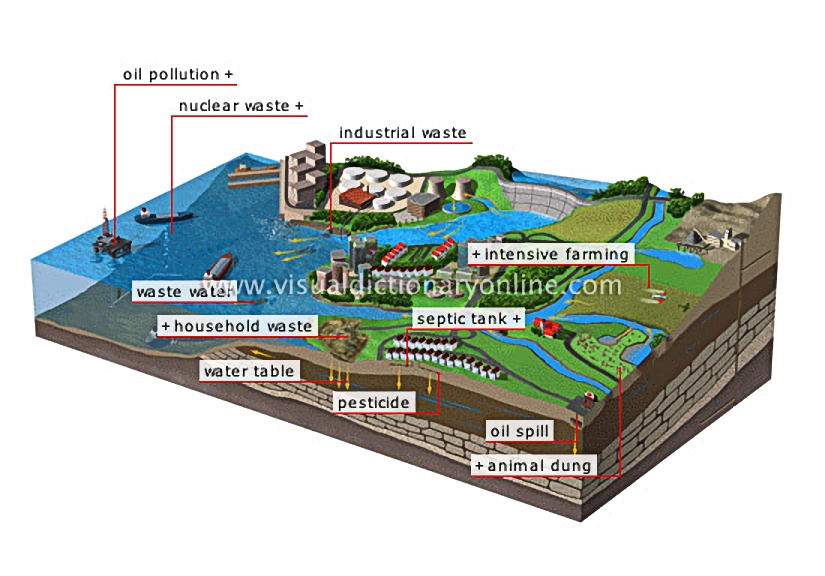
The cycle of the Earth’s waters is continuous, carrying and spreading pollutants introduced by human activity all around the planet.
intensive farming
To achieve maximum production, intensive farming uses chemical fertilizers responsible for various forms of air and water pollution.
animal dung
Animal dung introduces large quantities of nitrate into the soil; the nitrate then filters into the water table.
oil spill
Certain underground gas tanks leak, discharging hydrocarbons into the water table.
pesticide
Pesticide residue is found in the water table and in watercourses; it makes water unfit for consumption.
septic tank
Wastewater leakage from a dwelling’s underground tank contaminates the water table.
water table
Vast expanse of underground water fed by rainwater filtering through the earth; it supplies springs and can be collected in wells.
household waste
Burying household waste without taking any particular precautionary measures leads to contamination of the water table.
waste water
Untreated, it contains organic matter (e.g., bacteria, viruses) and potentially pathogenic substances that cause infection and promote the growth of algae.
oil pollution
Pollution caused by leaks from refineries and offshore drilling platforms, by ships emptying their fuel tanks at sea and by oil spills.
nuclear waste
Radioactive nuclear waste was once immersed at the bottom of the ocean; it has a life span of up to 1,000 years.
industrial waste
Industrial waste is highly variable; its principal components are lead, mercury, cadmium, hydrocarbons and acid deposits.
 previous


