acid rain

Rain that contains abnormally high concentrations of sulfuric acid and nitric acid.
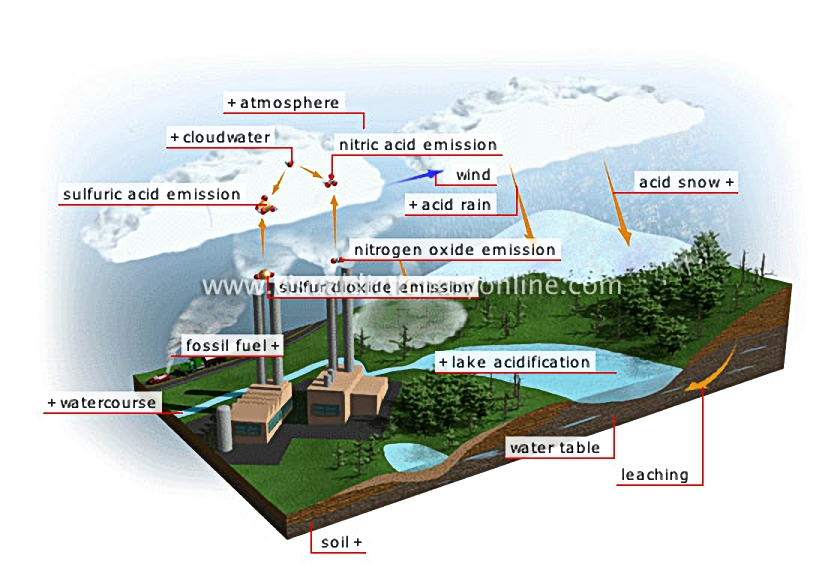
acid rain 						Sulfuric acid forms when sulfur dioxide combines with cloudwater.				  							Sulfur dioxide is produced mainly by coal-fired thermal power plants and smelters that refine ores with high sulfur content.				  							The use of fossil fuels by motor vehicles and industry triggers emissions of sulfur dioxide and nitrogen oxides.				  							Natural flow of water that varies in volume, depending on the ground slope and the number of tributaries.												Surface layer of the Earth’s crust; it results from the alteration of bedrock and the decomposition of organic matter.												Vast expanse of underground water fed by rainwater filtering through the earth; it supplies springs and can be collected in wells.				  							It causes plankton depletion and creates an imbalance in the food chain, sometimes leading to the total disappearance of plant and animal life.												Acid rain robs the soil of nutrients that are indispensable to plant life, such as magnesium, calcium and potassium.				  							Acid rain can take the form of snowflakes and fog.				  							Polluted clouds are carried by the wind, sometimes traveling thousands of miles; their pollutants then fall in the form of acid rain.				  							Rain that contains abnormally high concentrations of sulfuric acid and nitric acid.												Layer of air that surrounds the Earth and is composed mainly of nitrogen (78%) and oxygen (21%); only its lower portion is part of the biosphere.												Nitrogen oxide is discharged by motor vehicles and thermal power plants that burn fossil fuels.				  							Nitric acid and sulfuric acid dissolve in cloudwater.												Nitric acid forms when nitrogen oxides combine with cloudwater.
See Also


watercourse

soil profile

lake

hydrologic cycle

profile of the Earths atmosphere

clouds?[1]

sulfuric acid emission

Sulfuric acid forms when sulfur dioxide combines with cloudwater.

sulfur dioxide emission

Sulfur dioxide is produced mainly by coal-fired thermal power plants and smelters that refine ores with high sulfur content.

fossil fuel

The use of fossil fuels by motor vehicles and industry triggers emissions of sulfur dioxide and nitrogen oxides.

watercourse

Natural flow of water that varies in volume, depending on the ground slope and the number of tributaries.
watercourse
watercourse

soil

Surface layer of the Earth’s crust; it results from the alteration of bedrock and the decomposition of organic matter.
soil profile
soil profile

water table

Vast expanse of underground water fed by rainwater filtering through the earth; it supplies springs and can be collected in wells.

lake acidification

It causes plankton depletion and creates an imbalance in the food chain, sometimes leading to the total disappearance of plant and animal life.
lake
lake

leaching

Acid rain robs the soil of nutrients that are indispensable to plant life, such as magnesium, calcium and potassium.

acid snow

Acid rain can take the form of snowflakes and fog.

wind

Polluted clouds are carried by the wind, sometimes traveling thousands of miles; their pollutants then fall in the form of acid rain.

acid rain

Rain that contains abnormally high concentrations of sulfuric acid and nitric acid.
hydrologic cycle
hydrologic cycle

atmosphere

Layer of air that surrounds the Earth and is composed mainly of nitrogen (78%) and oxygen (21%); only its lower portion is part of the biosphere.
profile of the Earth’s atmosphere

nitrogen oxide emission

Nitrogen oxide is discharged by motor vehicles and thermal power plants that burn fossil fuels.

cloudwater

Nitric acid and sulfuric acid dissolve in cloudwater.
clouds [1]
clouds [1]

nitric acid emission

Nitric acid forms when nitrogen oxides combine with cloudwater.