long-range jet

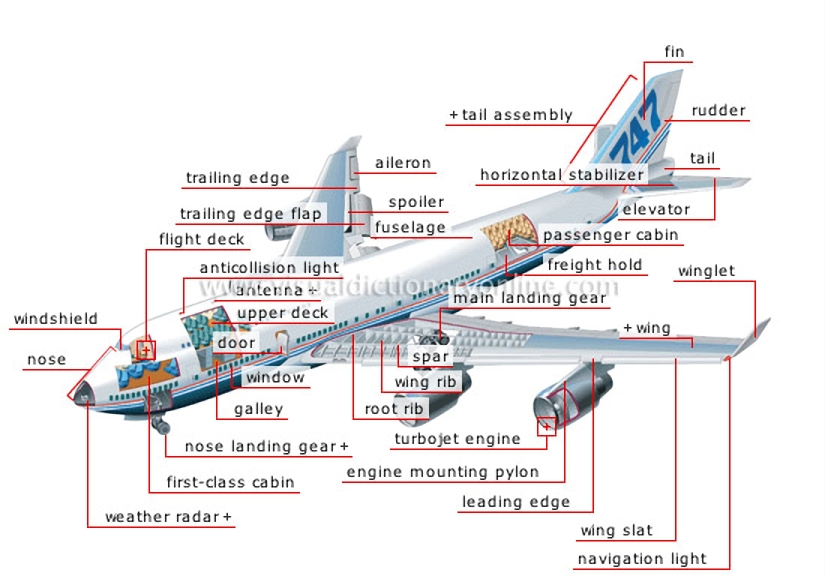
Aircraft that transports passengers and cargo traveling long distances at high altitudes (between 30,000 and 40,000 ft).
long-range jet 						Most comfortable part of the cabin where passengers receive special attention; it is always situated at the front of the aircraft.				  							Device that is used by the technical crew to evaluate weather conditions.				  							Retractable mechanism that enables the aircraft to land; it is located at the front end.												Compartment where meals for service are prepared.				  							Airtight window that lets natural light into the cabin.				  							Metal girder placed in the direction of the wingspan to absorb bending stress.				  							Metal part of the wing’s frame that is perpendicular to the spars.				  							Metal part that connects the wing to the fuselage.				  							Airtight door for entering the cabin; some doors are used only in emergencies.				  							Highly durable pane made of glass and plastic that provides good visibility.				  							Leading tip of the fuselage.				  							Compartment that contains all the navigation and control equipment; the navigation crew pilot the aircraft from here.												Bright red light that is visible from all directions to signal the aircraft’s presence.				  							Upper floor on very large aircraft that contains the flight deck and a passenger cabin.				  							Antenna that receives and transmits radio signals to communicate with the control tower or another aircraft.												Articulated flap on the trailing edge of the wing that deploys downward to increase the aircraft’s lift on takeoff.				  							Articulated flap on top of the wing that is deployed immediately after landing; it increases drag and reduces lift to slow the aircraft.				  							Back edge of the wing.				  							Hinged flap on the trailing edge of the wing near the tip for controlling the aircraft’s roll.				  							Compartment in which most of the passengers travel and receive basic services; it is also called economy class.				  							Horizontal surface on which aerodynamic forces are exerted to keep the aircraft in the air.												Jet-propulsion turbine producing hot gases that are expelled at high speed to provide the thrust necessary to propel the aircraft.												Structure that attaches a turbojet engine to a wing.				  							Articulated flap on the wing’s leading edge; it is deployed on takeoff and landing to increase lift.				  							Front edge of the wing.				  							Light signaling the direction in which the aircraft is flying: red on the left wing (port), green on the right wing (starboard) and white on the tail.				  							Protruding surface at the wingtip that enhances aerodynamics.				  							Retractable mechanism that enables the aircraft to land; it is located behind the aircraft’s center of gravity under its wings.				  							Compartment where baggage and cargo are stored.				  							Wing made up of the fixed horizontal tail assembly; it stabilizes the aircraft horizontally.				  							Articulated flap that is attached to the trailing edge of the horizontal stabilizer; it is used to change altitude and correct any pitch that may occur.				  							Aircraft body that is divided into several compartments and whose aerodynamic form reduces air friction; it is supported by the wings in flight.				  							Moving and fixed surfaces that are located at the tail of the aircraft for steering and stabilizing it.												Rear part of the fuselage.				  							Articulated flap at the rear of the fin that steers the aircraft and corrects any yaw that might occur.				  							Fixed vertical part of the tail assembly that keeps the aircraft stable.
See Also


wheel chock

telecommunications by satellite

examples of wing shapes

examples of tail shapes

forces acting on an airplane

movements of an airplane

flight deck

turbofan engine

first-class cabin

Most comfortable part of the cabin where passengers receive special attention; it is always situated at the front of the aircraft.

weather radar

Device that is used by the technical crew to evaluate weather conditions.

nose landing gear

Retractable mechanism that enables the aircraft to land; it is located at the front end.
wheel chock
wheel chock

galley

Compartment where meals for service are prepared.

window

Airtight window that lets natural light into the cabin.

spar

Metal girder placed in the direction of the wingspan to absorb bending stress.

wing rib

Metal part of the wing’s frame that is perpendicular to the spars.

root rib

Metal part that connects the wing to the fuselage.

door

Airtight door for entering the cabin; some doors are used only in emergencies.

windshield

Highly durable pane made of glass and plastic that provides good visibility.

nose

Leading tip of the fuselage.

flight deck

Compartment that contains all the navigation and control equipment; the navigation crew pilot the aircraft from here.
flight deck
flight deck

anticollision light

Bright red light that is visible from all directions to signal the aircraft’s presence.

upper deck

Upper floor on very large aircraft that contains the flight deck and a passenger cabin.

antenna

Antenna that receives and transmits radio signals to communicate with the control tower or another aircraft.
telecommunications by satellite

trailing edge flap

Articulated flap on the trailing edge of the wing that deploys downward to increase the aircraft’s lift on takeoff.

spoiler

Articulated flap on top of the wing that is deployed immediately after landing; it increases drag and reduces lift to slow the aircraft.

trailing edge

Back edge of the wing.

aileron

Hinged flap on the trailing edge of the wing near the tip for controlling the aircraft’s roll.

passenger cabin

Compartment in which most of the passengers travel and receive basic services; it is also called economy class.

wing

Horizontal surface on which aerodynamic forces are exerted to keep the aircraft in the air.
examples of wing shapes

turbojet engine

Jet-propulsion turbine producing hot gases that are expelled at high speed to provide the thrust necessary to propel the aircraft.
turbofan engine
turbofan engine

engine mounting pylon

Structure that attaches a turbojet engine to a wing.

wing slat

Articulated flap on the wing’s leading edge; it is deployed on takeoff and landing to increase lift.

leading edge

Front edge of the wing.

winglet

Protruding surface at the wingtip that enhances aerodynamics.

main landing gear

Retractable mechanism that enables the aircraft to land; it is located behind the aircraft’s center of gravity under its wings.

freight hold

Compartment where baggage and cargo are stored.

horizontal stabilizer

Wing made up of the fixed horizontal tail assembly; it stabilizes the aircraft horizontally.

elevator

Articulated flap that is attached to the trailing edge of the horizontal stabilizer; it is used to change altitude and correct any pitch that may occur.

fuselage

Aircraft body that is divided into several compartments and whose aerodynamic form reduces air friction; it is supported by the wings in flight.

tail assembly

Moving and fixed surfaces that are located at the tail of the aircraft for steering and stabilizing it.
examples of tail shapes

tail

Rear part of the fuselage.

rudder

Articulated flap at the rear of the fin that steers the aircraft and corrects any yaw that might occur.

fin

Fixed vertical part of the tail assembly that keeps the aircraft stable.