dorsum of tongue

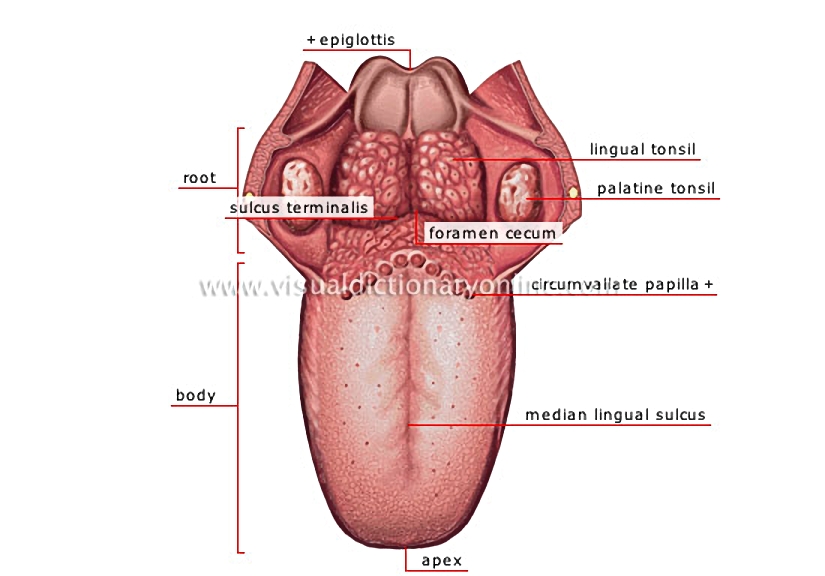
dorsum of tongue 						Free mobile portion of the tongue composed mostly of mucous-covered muscles and bearing the taste buds.				  							Depression extending over the entire length of the body of the tongue and separating it into two symmetrical halves.				  							Inverted V-shaped depression separating the base of the body of the tongue, topped by the foramen cecum.				  							Part that fixes the tongue to the mandible and the hyoid bone of the skull; it is also joined on each side to the walls of the pharynx.				  							Movable cartilaginous plate ensuring that the larynx closes during ingestion of food so that food cannot enter the respiratory tract.												Mobile terminal end of the tongue; it mostly perceives sweet flavors.				  							Each of the large taste buds (about 10) forming a lingual V at the back of the body of the tongue ensuring the taste function; they mostly perceive bitter flavors.												Small depression located at the base of the tongue, at the top of the sulcus terminalis.				  							Lymphoid structure (rich in white blood cells) located on each side of the base of the tongue; it protects the respiratory tract by fighting bacteria.				  							Lymphoid structure (rich in white blood cells) located at the base of the tongue; it assists in immune defense.

See Also


respiratory system

taste receptors

mouth

body

Free mobile portion of the tongue composed mostly of mucous-covered muscles and bearing the taste buds.

median lingual sulcus

Depression extending over the entire length of the body of the tongue and separating it into two symmetrical halves.

sulcus terminalis

Inverted V-shaped depression separating the base of the body of the tongue, topped by the foramen cecum.

root

Part that fixes the tongue to the mandible and the hyoid bone of the skull; it is also joined on each side to the walls of the pharynx.

epiglottis

Movable cartilaginous plate ensuring that the larynx closes during ingestion of food so that food cannot enter the respiratory tract.
respiratory system
respiratory system

apex

Mobile terminal end of the tongue; it mostly perceives sweet flavors.

circumvallate papilla

Each of the large taste buds (about 10) forming a lingual V at the back of the body of the tongue ensuring the taste function; they mostly perceive bitter flavors.
taste receptors
taste receptors

foramen cecum

Small depression located at the base of the tongue, at the top of the sulcus terminalis.

palatine tonsil

Lymphoid structure (rich in white blood cells) located on each side of the base of the tongue; it protects the respiratory tract by fighting bacteria.

lingual tonsil

Lymphoid structure (rich in white blood cells) located at the base of the tongue; it assists in immune defense.