digestive system

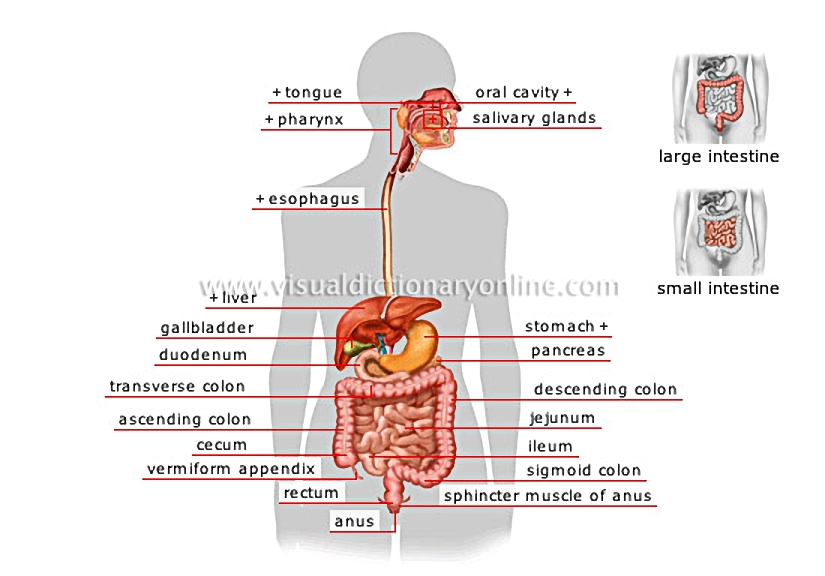
Formed of the mouth, digestive tract and appended glands, it converts ingested food so that it can be assimilated by the organism.
digestive system 						Terminal part of the small intestine between the jejunum and cecum.				  							Middle section of the small intestine between the duodenum and the ileum; the majority of nutrients are absorbed here.				  							Anterior section of the small intestine; secretions from the liver and pancreas, as well as food partially digested in the stomach, empty into it.				  							Digestive gland connected to the duodenum; produces secretions and hormones (especially insulin).				  							Dilated section of the digestive tract; it stores, stirs and mixes food with the gastric juices it secretes before emptying it into the duodenum.												Muscular membranous channel of the anterior section of the digestive tract; it allows food to reach the stomach.												Muscular membranous channel connecting the nasal cavity to the larynx and the oral cavity to the esophagus; it enables breathing, ingestion of food and speech.												Terminal section of the large intestine preceding the anus.				  							Muscle ensuring the contraction and relaxation of the anus and enabling defecation.				  							Terminal orifice of the digestive tube controlled by a sphincter enabling ejection of fecal matter.				  							Fourth segment of the colon; it carries waste to the rectum.				  							Tubular extension of the cecum; this appendage is occasionally the site of appendicitis, a severe inflammation.				  							Anterior part of the large intestine; it receives food particles from the ileum.				  							First segment of the colon; it absorbs water from food residue before it is excreted.				  							Third segment of the colon; it stores waste before it is eliminated.				  							Second segment of the colon (middle section of the large intestine). The right colon (the ascending colon plus half the transverse colon) mainly enables absorption of water.				  							Small reservoir where bile secreted by the liver gathers before emptying into the duodenum during digestion. Bile helps in the digestion of fatty substances.				  							Viscera secreting substances, including bile, that help digestion and break up certain toxins contained in the blood.												Each of the three pairs of organs secreting a liquid (saliva) that contains a digestive enzyme; it is used to moisten food to facilitate its ingestion.				  							Flexible muscular structure of the oral cavity; it helps in tasting, masticating and ingesting food, and also facilitates speech.												Anterior cavity of the digestive tract enabling ingestion of food; it also aids in breathing.												Narrow section of the digestive tract, about 20 ft long, between the stomach and cecum, where a part of digestion and food absorption occurs.				  							Last wide section of the digestive tract, about 5 ft long, where the final stage of digestion and elimination of waste occurs; it includes the colon and the rectum.
See Also


schema of circulation

respiratory system

mouth

urinary system

dorsum of tongue

ileum

Terminal part of the small intestine between the jejunum and cecum.

jejunum

Middle section of the small intestine between the duodenum and the ileum; the majority of nutrients are absorbed here.

duodenum

Anterior section of the small intestine; secretions from the liver and pancreas, as well as food partially digested in the stomach, empty into it.

pancreas

Digestive gland connected to the duodenum; produces secretions and hormones (especially insulin).

stomach

Dilated section of the digestive tract; it stores, stirs and mixes food with the gastric juices it secretes before emptying it into the duodenum.
schema of circulation

esophagus

Muscular membranous channel of the anterior section of the digestive tract; it allows food to reach the stomach.
respiratory system
respiratory system

pharynx

Muscular membranous channel connecting the nasal cavity to the larynx and the oral cavity to the esophagus; it enables breathing, ingestion of food and speech.
respiratory system
respiratory system

rectum

Terminal section of the large intestine preceding the anus.

sphincter muscle of anus

Muscle ensuring the contraction and relaxation of the anus and enabling defecation.

anus

Terminal orifice of the digestive tube controlled by a sphincter enabling ejection of fecal matter.

sigmoid colon

Fourth segment of the colon; it carries waste to the rectum.

vermiform appendix

Tubular extension of the cecum; this appendage is occasionally the site of appendicitis, a severe inflammation.

cecum

Anterior part of the large intestine; it receives food particles from the ileum.

ascending colon

First segment of the colon; it absorbs water from food residue before it is excreted.

descending colon

Third segment of the colon; it stores waste before it is eliminated.

transverse colon

Second segment of the colon (middle section of the large intestine). The right colon (the ascending colon plus half the transverse colon) mainly enables absorption of water.

gallbladder

Small reservoir where bile secreted by the liver gathers before emptying into the duodenum during digestion. Bile helps in the digestion of fatty substances.

liver

Viscera secreting substances, including bile, that help digestion and break up certain toxins contained in the blood.
schema of circulation

salivary glands

Each of the three pairs of organs secreting a liquid (saliva) that contains a digestive enzyme; it is used to moisten food to facilitate its ingestion.

tongue

Flexible muscular structure of the oral cavity; it helps in tasting, masticating and ingesting food, and also facilitates speech.
mouth
mouth
dorsum of tongue
dorsum of tongue

oral cavity

Anterior cavity of the digestive tract enabling ingestion of food; it also aids in breathing.
respiratory system
respiratory system

small intestine

Narrow section of the digestive tract, about 20 ft long, between the stomach and cecum, where a part of digestion and food absorption occurs.

large intestine

Last wide section of the digestive tract, about 5 ft long, where the final stage of digestion and elimination of waste occurs; it includes the colon and the rectum.