seasons of the year

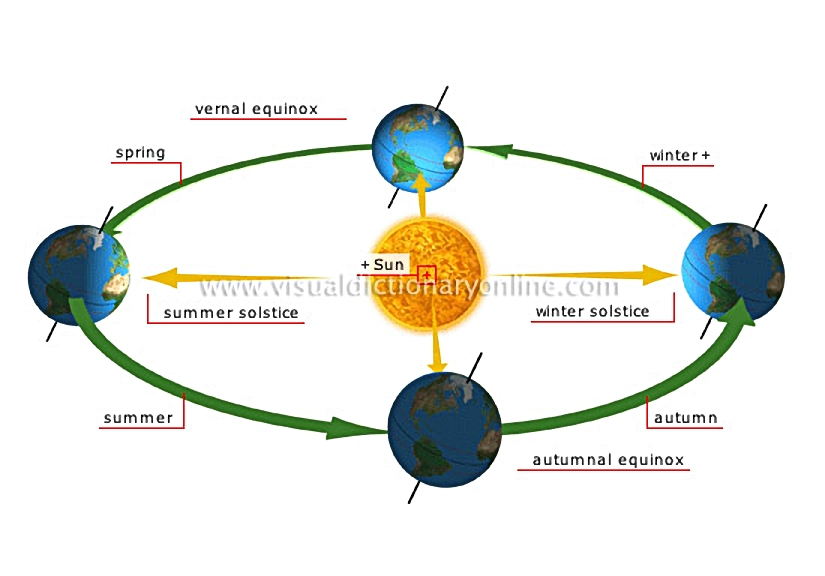
Periodic climate changes over the course of a year; they are a function of the Earth’s inclination toward the Sun and its rotation around it.
seasons of the year 						Source of the Earth’s heat.												At the equinoxes, day and night are of equal length; the autumnal (fall) equinox is on September 22 or 23 in the Northern Hemisphere.				  							Season between the autumnal equinox and the winter solstice.				  							Shortest day of the year; it falls on December 21 or 22 in the Northern Hemisphere.				  							Season between the winter solstice and the vernal equinox.												Season between the summer solstice and the autumnal equinox.				  							Longest day of the year; it falls on June 21 or 22 in the Northern Hemisphere.				  							Season between the vernal equinox and the summer solstice.				  							At the equinoxes, day and night are of equal length; the vernal (spring) equinox is on March 20 or 21 in the Northern Hemisphere.
See Also


planets and satellites

winter precipitations

structure of the Sun?[1]

Sun

Source of the Earth’s heat.
planets and satellites
structure of the Sun [1]

autumnal equinox

At the equinoxes, day and night are of equal length; the autumnal (fall) equinox is on September 22 or 23 in the Northern Hemisphere.

autumn

Season between the autumnal equinox and the winter solstice.

winter solstice

Shortest day of the year; it falls on December 21 or 22 in the Northern Hemisphere.

winter

Season between the winter solstice and the vernal equinox.
winter precipitations

summer

Season between the summer solstice and the autumnal equinox.

summer solstice

Longest day of the year; it falls on June 21 or 22 in the Northern Hemisphere.

spring

Season between the vernal equinox and the summer solstice.

vernal equinox

At the equinoxes, day and night are of equal length; the vernal (spring) equinox is on March 20 or 21 in the Northern Hemisphere.