parts of a bicycle

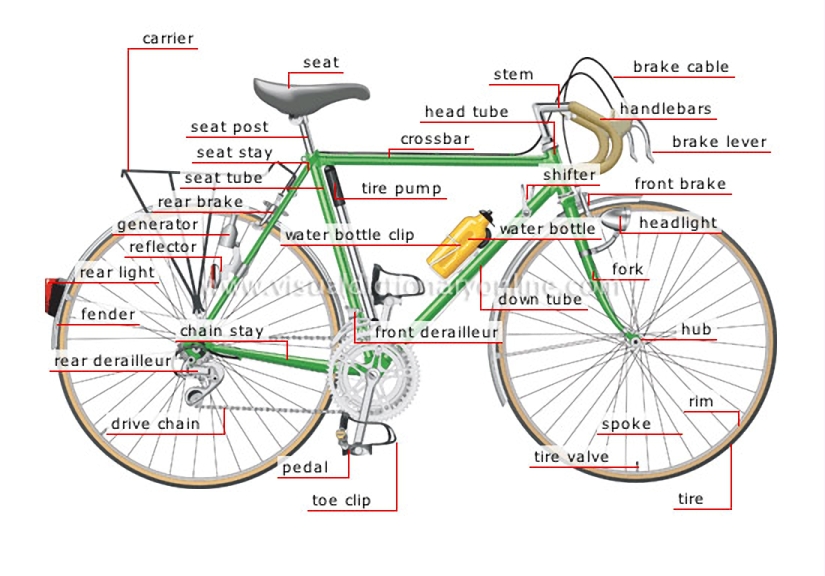
parts of a bicycle 						Metal device attached to the pedals that covers the front of the feet, keeping the feet in the proper position and increasing pedaling power.				  							Part attached to a crank that the cyclist rotates to provide the bicycle’s power.				  							Mechanism for changing the front gears by lifting the chain from one chain wheel to another; it allows the cyclist to adapt to road conditions.				  							Set of metal links meshing with the sprockets on the chain wheel and gear wheel to transmit the pedaling motion to the rear wheel.				  							Tube connecting the pedal mechanism to the rear-wheel hub.				  							Mechanism for changing the rear gears by lifting the chain from one gear wheel to another; it allows the cyclist to adapt to road conditions.				  							Device returning light toward its source so that other users of the road might see the cyclist.				  							Piece of curved metal covering part of the wheel to protect the cyclist from being splashed.				  							Lamp signaling the bicycle’s presence in the dark.				  							Mechanism activated by the rear wheel, converting the wheel’s motion into electric energy to power the front and rear lights.				  							Device attached to the back of the bicycle for carrying bags on each side and packages on top.				  							Mechanism activated by a brake cable, comprising a caliper and return springs; it forces a pair of brake pads against the sidewalls to stop the bicycle.				  							Part of the frame leaning slightly to the rear, receiving the seat post and joining the pedal mechanism.				  							Tube connecting the top of the seat tube with the rear-wheel hub.				  							Component supporting and attaching the seat, inserted to variable depth into the seat tube to adjust the seat’s height.				  							Small triangular seat attached to the bicycle’s frame.				  							Device that compresses air and is used to inflate a bicycle tire’s inner tube.				  							Horizontal part of the frame, connecting the head tube with the seat tube and stabilizing the frame.				  							Part of the frame connecting the head tube to the pedal mechanism; it is the longest and thickest tube in the frame and gives it its rigidity.				  							Support attached to the down tube or the seat tube for carrying the water bottle.				  							Soft plastic container, with a quick-open cap, for drinking from.				  							Small clack valve sealing the inflation opening of the inner tube; it allows air to enter but prevents it from escaping.				  							Thin metal spindle connecting the hub to the rim.				  							Structure made of cotton and steel fibers coated with rubber, mounted on the rim to form the casing for the inner tube.				  							Metal circle constituting the wheel’s circumference and on which the tire is mounted.				  							Central part of the wheel from which spokes radiate. Inside the hub are ball bearings enabling it to rotate around its axle.				  							Two tubes connected to the head tube and attached to each end of the front-wheel hub.				  							Lamp illuminating the ground a few yards in front of the bicycle.				  							Mechanism activated by a brake cable, comprising a caliper and return springs; it forces a pair of brake pads against the sidewalls to slow down the front wheel.				  							Lever attached to the handlebars for activating the brake caliper via a cable.				  							Tube using ball bearings to transmit the steering movement to the fork.				  							Part whose height is adjustable; it is inserted into the head tube and supports the handlebars.				  							Device made up of two handles connected by a tube, for steering the bicycle.				  							Sheathed steel cable transmitting the pressure exerted on the brake lever to the brake.				  							Lever for changing gears via a cable moving the derailleur.

toe clip

Metal device attached to the pedals that covers the front of the feet, keeping the feet in the proper position and increasing pedaling power.

pedal

Part attached to a crank that the cyclist rotates to provide the bicycle’s power.

front derailleur

Mechanism for changing the front gears by lifting the chain from one chain wheel to another; it allows the cyclist to adapt to road conditions.

drive chain

Set of metal links meshing with the sprockets on the chain wheel and gear wheel to transmit the pedaling motion to the rear wheel.

chain stay

Tube connecting the pedal mechanism to the rear-wheel hub.

rear derailleur

Mechanism for changing the rear gears by lifting the chain from one gear wheel to another; it allows the cyclist to adapt to road conditions.

reflector

Device returning light toward its source so that other users of the road might see the cyclist.

fender

Piece of curved metal covering part of the wheel to protect the cyclist from being splashed.

rear light

Lamp signaling the bicycle’s presence in the dark.

generator

Mechanism activated by the rear wheel, converting the wheel’s motion into electric energy to power the front and rear lights.

carrier

Device attached to the back of the bicycle for carrying bags on each side and packages on top.

rear brake

Mechanism activated by a brake cable, comprising a caliper and return springs; it forces a pair of brake pads against the sidewalls to stop the bicycle.

seat tube

Part of the frame leaning slightly to the rear, receiving the seat post and joining the pedal mechanism.

seat stay

Tube connecting the top of the seat tube with the rear-wheel hub.

seat post

Component supporting and attaching the seat, inserted to variable depth into the seat tube to adjust the seat’s height.

seat

Small triangular seat attached to the bicycle’s frame.

tire pump

Device that compresses air and is used to inflate a bicycle tire’s inner tube.

crossbar

Horizontal part of the frame, connecting the head tube with the seat tube and stabilizing the frame.

down tube

Part of the frame connecting the head tube to the pedal mechanism; it is the longest and thickest tube in the frame and gives it its rigidity.

water bottle clip

Support attached to the down tube or the seat tube for carrying the water bottle.

water bottle

Soft plastic container, with a quick-open cap, for drinking from.

tire valve

Small clack valve sealing the inflation opening of the inner tube; it allows air to enter but prevents it from escaping.

spoke

Thin metal spindle connecting the hub to the rim.

tire

Structure made of cotton and steel fibers coated with rubber, mounted on the rim to form the casing for the inner tube.

rim

Metal circle constituting the wheel’s circumference and on which the tire is mounted.

hub

Central part of the wheel from which spokes radiate. Inside the hub are ball bearings enabling it to rotate around its axle.

fork

Two tubes connected to the head tube and attached to each end of the front-wheel hub.

headlight

Lamp illuminating the ground a few yards in front of the bicycle.

front brake

Mechanism activated by a brake cable, comprising a caliper and return springs; it forces a pair of brake pads against the sidewalls to slow down the front wheel.

brake lever

Lever attached to the handlebars for activating the brake caliper via a cable.

head tube

Tube using ball bearings to transmit the steering movement to the fork.

stem

Part whose height is adjustable; it is inserted into the head tube and supports the handlebars.

handlebars

Device made up of two handles connected by a tube, for steering the bicycle.

brake cable

Sheathed steel cable transmitting the pressure exerted on the brake lever to the brake.
shifter

Lever for changing gears via a cable moving the derailleur.