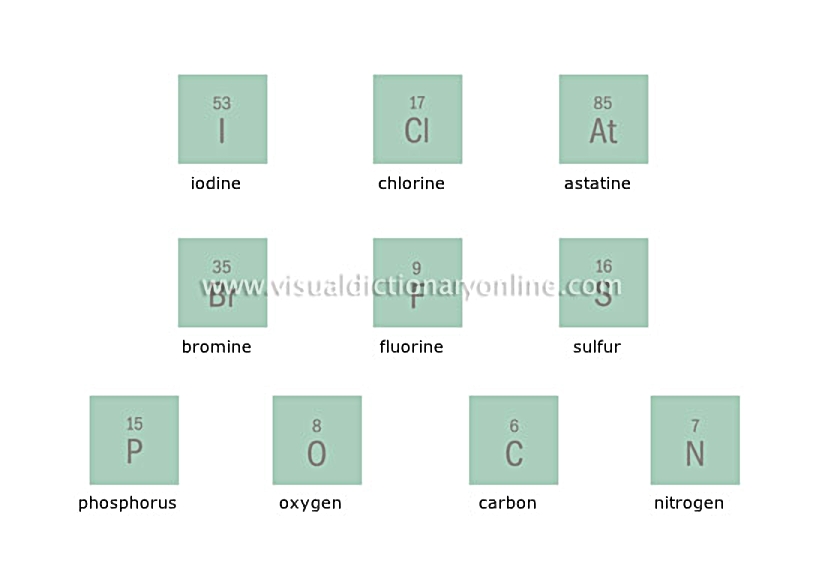
non-metals
Nonmetallic elements that are lusterless and nonmalleable; they are mostly gases and solids and are usually poor conductors of heat and electricity.
astatine
Radioactive element that is extremely rare in nature; it is used in medicine to study the thyroid gland and to detect cancerous tumors.
iodine
Solid that is used especially in pharmaceuticals (revulsives, antiseptics), in photography and dyes; it is also essential for the human body.
bromine
Very toxic liquid that is used mainly to manufacture teargas, dyes and disinfectants and in photography and medications.
phosphorus
Solid used especially in fertilizer (phosphates), matches and pyrotechnics (fireworks); it is also necessary for human beings.
sulfur
Solid that is quite common in nature; it is used in car batteries, fertilizer, paint, explosives, pharmaceuticals and rubber.
chlorine
Abundant toxic gas that is used to whiten fabric and paper, disinfect water and manufacture various other products (solvents).
fluorine
Gas that is used especially for enriching uranium and manufacturing antistick coatings; it is present in bones and teeth.
oxygen
Gas that is the most abundant element on Earth and that comprises about 20% of the atmospheric air; it is used to breathe and in the manufacture of steel.
nitrogen
Gas that constitutes about 78% of the Earth’s atmosphere, present in all animal and vegetable tissue (proteins), and in fertilizer, ammonia and explosives.
carbon
Element common in its pure state (diamond, graphite) or found in combination (air, coal, petroleum); it is present in animal and plant tissue.
![transition-metals [2]](../../../images/flechePrevious.gif "transition-metals [2] image") previous
previous
