table of elements

Table created by Dmitry Mendeleyev in 1869 that classifies the now approximately 110 known chemical elements such as oxygen, hydrogen, iron and lead. The elements are classified in order of their atomic weight and arranged into groups having similar properties.
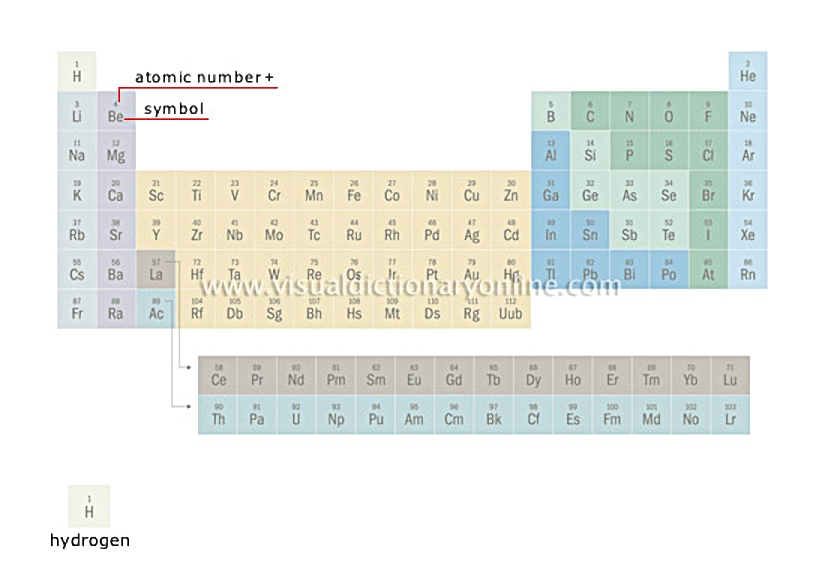
table of elements 						The name of each chemical element is represented by one or two letters, the first of which is in uppercase (e.g., O for oxygen, Cl for chlorine).				  							Number that indicates the order of a chemical element in the table of elements and corresponds to the number of protons contained in its nucleus.												This gas is the most abundant element in the universe and makes up part of the composition of water. It is used especially in petrochemistry and rocket engines.

See Also


atom

symbol

The name of each chemical element is represented by one or two letters, the first of which is in uppercase (e.g., O for oxygen, Cl for chlorine).

atomic number

Number that indicates the order of a chemical element in the table of elements and corresponds to the number of protons contained in its nucleus.
atom
atom

hydrogen

This gas is the most abundant element in the universe and makes up part of the composition of water. It is used especially in petrochemistry and rocket engines.