structure of a flower

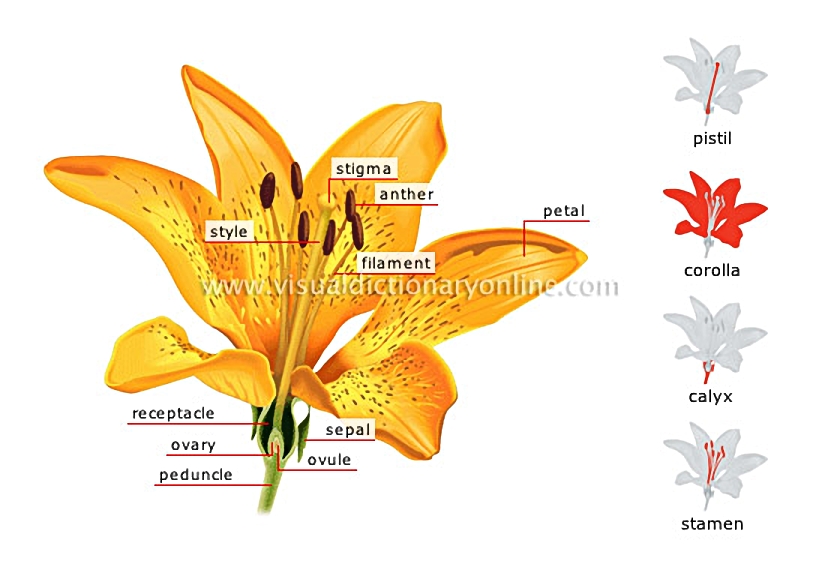
structure of a flower 						Terminal offshoot of the stem or twig; it first connects the flower, then the fruit, to the plant.				  							Small rounded structure produced by the ovary and containing the female cell; after fertilization, the seed develops from it.				  							Hollow structure containing one or more ovules; the fruit usually develops from it after fertilization.				  							Enlarged portion of the peduncle containing and supporting the other parts of the flower.				  							Usually green part of the flower that protects the flower’s internal structures; it may fall after flowering occurs or remain until the fruit has ripened.				  							Usually colorful and scented part of the flower that surrounds the male and female reproductive organs; it often helps attract pollinators.				  							Upper part of the male floral organ (stamen) that produces pollen grains; at maturity, it splits to release them.				  							Cylindrical axis connecting the anther to the rest of the flower.				  							Upper part of the female floral organ (pistil) that receives and holds pollen.				  							Cylindrical axis connecting the stigma to the ovary.				  							Each of the female floral organs at the flower’s center, consisting of an ovary, a stylus and a stigma.				  							Part of the flower composed of all its sepals.				  							Each of the male floral organs, consisting of a filament and an anther.				  							Part of the flower composed of all its petals.
See Also


structure of a plant

peduncle

Terminal offshoot of the stem or twig; it first connects the flower, then the fruit, to the plant.

ovule

Small rounded structure produced by the ovary and containing the female cell; after fertilization, the seed develops from it.

ovary

Hollow structure containing one or more ovules; the fruit usually develops from it after fertilization.

receptacle

Enlarged portion of the peduncle containing and supporting the other parts of the flower.

sepal

Usually green part of the flower that protects the flower’s internal structures; it may fall after flowering occurs or remain until the fruit has ripened.

petal

Usually colorful and scented part of the flower that surrounds the male and female reproductive organs; it often helps attract pollinators.

anther

Upper part of the male floral organ (stamen) that produces pollen grains; at maturity, it splits to release them.

filament

Cylindrical axis connecting the anther to the rest of the flower.

stigma

Upper part of the female floral organ (pistil) that receives and holds pollen.

style

Cylindrical axis connecting the stigma to the ovary.

pistil

Each of the female floral organs at the flower’s center, consisting of an ovary, a stylus and a stigma.

calyx

Part of the flower composed of all its sepals.

stamen

Each of the male floral organs, consisting of a filament and an anther.

corolla

Part of the flower composed of all its petals.