nuclear generating station

Plant that produces electricity from thermal energy generated by the fission of fuel atoms in a reactor.
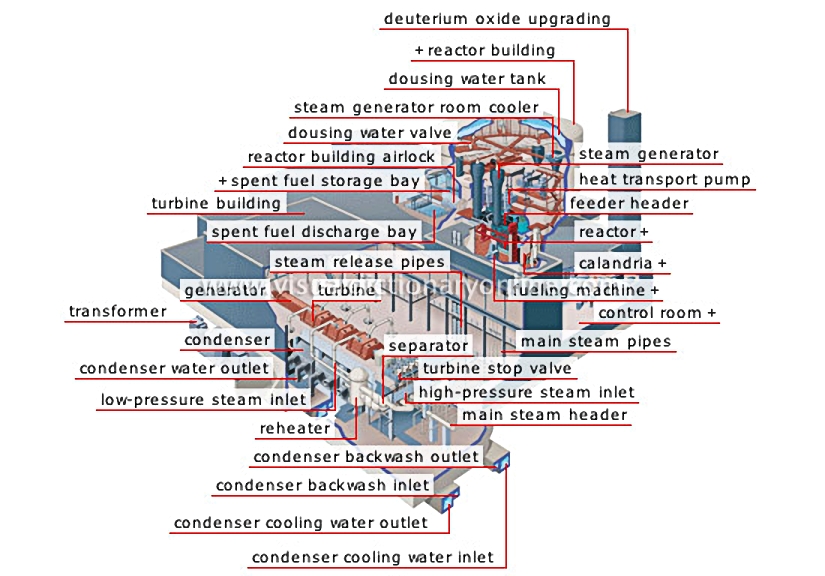
nuclear generating station 						Steam from the steam generators is carried to the first section of the turbine; here, it cools down and loses some of its energy.				  							Device that removes any water from the steam to prevent damage to the turbine’s runner.				  							Device that blocks steam from entering the turbine.				  							Device used to increase the temperature of the steam from the first section of the turbine to reinject it into the second section.				  							Water in the condenser returns to its original source.				  							Heated steam is reinjected into the turbine, where it releases its remaining energy.				  							Water collected from the water table flows in a circuit to cool the steam from the turbine and condense it into water.				  							Device used to alter the electric voltage; the voltage is increased at the station outlet in order to carry the current over long distances.				  							Machine in two sections whose steam-activated runner transmits mechanical energy to the rotor shaft of the generator.				  							Turbine-powered rotating machine that converts mechanical energy into electric energy to direct it toward a transmission network.				  							Enclosure housing the devices (turbines and generator) used to produce electricity.				  							Water-filled basin that receives spent fuel as it exits the accept machine; the water acts as a protective barrier against the radiation emitted by the fuel.				  							Secure area where equipment and personnel can pass safely through the reactor building.				  							Device that releases water from the dousing water tank in the reactor building to condense the radioactive steam.				  							Apparatus that turns water into steam, which in turn activates the turbine.				  							Vat that contains water to cool the radioactive steam in the reactor in the event of an accident; this prevents a rise in pressure.				  							Concrete structure surrounding the reactor vessel; it is a protective barrier against radioactivity.												Cooling system that controls the temperature of the room housing the generators.				  							In power stations where heavy water is used as a moderator, a filter holds back steam (deuterium oxide) at the mouth of the stack.				  							Apparatus that circulates the coolant fluid between the reactor and the steam generator.				  							Large-diameter pipe that collects the coolant fluid at the reactor inlet and outlet.				  							Tightly sealed area where fission of the fuel is carried out in a controlled manner to release heat.												Safety containment wall that separates the reactor from the rest of the building.												Remote-controlled cylinder used to load and unload the reactor.												Area that houses the personnel and equipment used to operate and monitor the power station.				  							All the pipes used to carry steam to the separator outlet.				  							All the pipes used to carry steam to the steam generator outlet.				  							Device that collects and disperses steam from the steam generators.				  							Channel through which condensed water from the steam in the turbine returns to the water table.				  							Channel through which water from a watercourse is pumped into the condenser.				  							Inlet channel for the water needed for the condensation circuit of the steam in the turbine.				  							Channel through which the water from the condenser returns to the watercourse from which it came.				  							Water-filled basin where the spent fuel is stored for several years before it can be disposed of safely.
See Also


nuclear reactor

fuel handling sequence

fuel bundle

heavy-water reactor

production of electricity from nuclear energy

high-pressure steam inlet

Steam from the steam generators is carried to the first section of the turbine; here, it cools down and loses some of its energy.

separator

Device that removes any water from the steam to prevent damage to the turbine’s runner.

turbine stop valve

Device that blocks steam from entering the turbine.

reheater

Device used to increase the temperature of the steam from the first section of the turbine to reinject it into the second section.

condenser water outlet

Water in the condenser returns to its original source.

low-pressure steam inlet

Heated steam is reinjected into the turbine, where it releases its remaining energy.

condenser

Water collected from the water table flows in a circuit to cool the steam from the turbine and condense it into water.

transformer

Device used to alter the electric voltage; the voltage is increased at the station outlet in order to carry the current over long distances.

turbine

Machine in two sections whose steam-activated runner transmits mechanical energy to the rotor shaft of the generator.

generator

Turbine-powered rotating machine that converts mechanical energy into electric energy to direct it toward a transmission network.

turbine building

Enclosure housing the devices (turbines and generator) used to produce electricity.

spent fuel discharge bay

Water-filled basin that receives spent fuel as it exits the accept machine; the water acts as a protective barrier against the radiation emitted by the fuel.

reactor building airlock

Secure area where equipment and personnel can pass safely through the reactor building.

dousing water valve

Device that releases water from the dousing water tank in the reactor building to condense the radioactive steam.

steam generator

Apparatus that turns water into steam, which in turn activates the turbine.

dousing water tank

Vat that contains water to cool the radioactive steam in the reactor in the event of an accident; this prevents a rise in pressure.

reactor building

Concrete structure surrounding the reactor vessel; it is a protective barrier against radioactivity.
nuclear reactor
nuclear reactor

steam generator room cooler

Cooling system that controls the temperature of the room housing the generators.

deuterium oxide upgrading

In power stations where heavy water is used as a moderator, a filter holds back steam (deuterium oxide) at the mouth of the stack.

heat transport pump

Apparatus that circulates the coolant fluid between the reactor and the steam generator.

feeder header

Large-diameter pipe that collects the coolant fluid at the reactor inlet and outlet.

reactor

Tightly sealed area where fission of the fuel is carried out in a controlled manner to release heat.
nuclear reactor
nuclear reactor

calandria

Safety containment wall that separates the reactor from the rest of the building.
nuclear reactor
nuclear reactor

fueling machine

Remote-controlled cylinder used to load and unload the reactor.
fuel handling sequence

control room

Area that houses the personnel and equipment used to operate and monitor the power station.

steam release pipes

All the pipes used to carry steam to the separator outlet.

main steam pipes

All the pipes used to carry steam to the steam generator outlet.

main steam header

Device that collects and disperses steam from the steam generators.

condenser backwash outlet

Channel through which condensed water from the steam in the turbine returns to the water table.

condenser cooling water inlet

Channel through which water from a watercourse is pumped into the condenser.

condenser backwash inlet

Inlet channel for the water needed for the condensation circuit of the steam in the turbine.

condenser cooling water outlet

Channel through which the water from the condenser returns to the watercourse from which it came.

spent fuel storage bay

Water-filled basin where the spent fuel is stored for several years before it can be disposed of safely.
fuel bundle
fuel bundle