production of electricity from geothermal energy

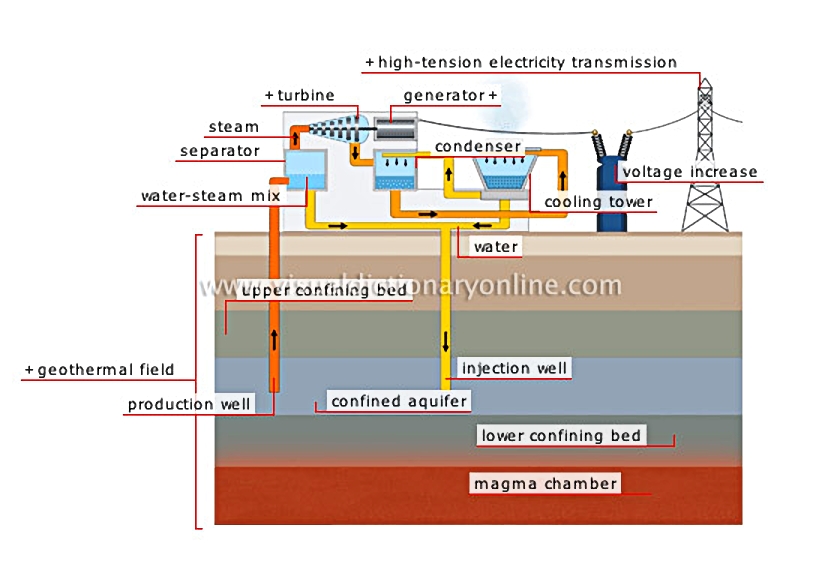
Hot water contained in the ground near a volcano, geyser or thermal source is piped to the surface by drilling to extract steam and produce electricity.
production of electricity from geothermal energy 						Turbine-powered rotating machine that converts mechanical energy into electric energy to direct it toward a transmission network.												Borehole dug into the ground to allow the hot water contained in the aquifer to be pumped to produce electricity.				  							Area of Earth’s crust where a pocket of hot confined water is close enough to the surface to be exploited.												Layer of porous sedimentary rock between two impermeable layers where water accumulates at a temperature between 300°F and 750°F.				  							Layer of impermeable rock that transmits heat from the magma chamber to the aquifer.				  							Pocket of magma (molten rock emerging from Earth’s crust) that constitutes a heat source; it transmits its thermal energy to water.				  							Layer of impermeable rock that covers the confined aquifer.				  							Device that separates water from steam, which it recovers to operate the turbine; the water is reinjected into the aquifer.				  							Steam-powered machine whose wheel transmits mechanical energy to the generator and causes it to rotate.												Borehole that is drilled into the ground to return water to the aquifer, where it is reheated after its heat has been extracted.				  							Gaseous state of water; steam pressure operates the turbine.				  							Liquid made up of hydrogen and oxygen that becomes steam at 212°F; the water transfers Earth’s internal heat.				  							Hot water extracted from the aquifer; as it rises to the surface, it is partially turned into steam.				  							Using high-voltage lines to transmit electricity over long distances reduces the strength of the current and, as a result, energy losses.				  							At the outlet end of the power plant, the transformer increases the voltage; this reduces energy losses during transmission over long distances.				  							Device that cools the condenser’s hot water on contact with the air; some of the water evaporates and the rest is reinjected into the condenser and the aquifer.				  							Circuit that cools the steam from the turbine and condenses it into water.
See Also


generator unit

structure of the Earth

generator

Turbine-powered rotating machine that converts mechanical energy into electric energy to direct it toward a transmission network.
generator unit
generator unit

production well

Borehole dug into the ground to allow the hot water contained in the aquifer to be pumped to produce electricity.

geothermal field

Area of Earth’s crust where a pocket of hot confined water is close enough to the surface to be exploited.
structure of the Earth

confined aquifer

Layer of porous sedimentary rock between two impermeable layers where water accumulates at a temperature between 300°F and 750°F.

lower confining bed

Layer of impermeable rock that transmits heat from the magma chamber to the aquifer.

magma chamber

Pocket of magma (molten rock emerging from Earth’s crust) that constitutes a heat source; it transmits its thermal energy to water.

upper confining bed

Layer of impermeable rock that covers the confined aquifer.

separator

Device that separates water from steam, which it recovers to operate the turbine; the water is reinjected into the aquifer.

turbine

Steam-powered machine whose wheel transmits mechanical energy to the generator and causes it to rotate.
generator unit
generator unit

injection well

Borehole that is drilled into the ground to return water to the aquifer, where it is reheated after its heat has been extracted.

steam

Gaseous state of water; steam pressure operates the turbine.

water

Liquid made up of hydrogen and oxygen that becomes steam at 212°F; the water transfers Earth’s internal heat.

water-steam mix

Hot water extracted from the aquifer; as it rises to the surface, it is partially turned into steam.

high-tension electricity transmission

Using high-voltage lines to transmit electricity over long distances reduces the strength of the current and, as a result, energy losses.

voltage increase

At the outlet end of the power plant, the transformer increases the voltage; this reduces energy losses during transmission over long distances.

cooling tower

Device that cools the condenser’s hot water on contact with the air; some of the water evaporates and the rest is reinjected into the condenser and the aquifer.

condenser

Circuit that cools the steam from the turbine and condenses it into water.