upright piano action

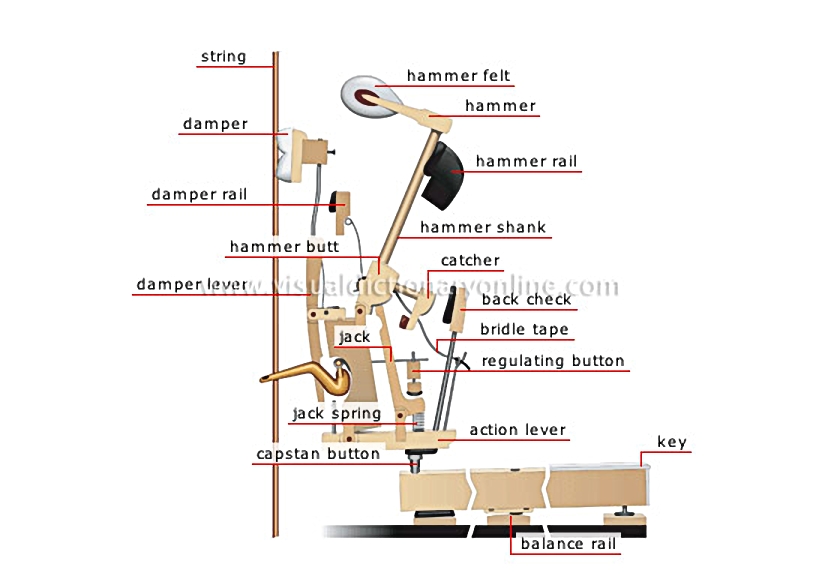
Combination of elements whereby energy applied to a key is transferred to the hammer, which in turn causes the strings to vibrate.
upright piano action 						Felt-covered hammer head that strikes the string or strings and causes them to vibrate.				  							The strings are: single and made of copper for the bass, double and made of steel for the mid-range, and triple and made of finer steel for the treble range.				  							Piece of felt-covered wood that rests on the string or strings to stop them from vibrating after the key is released.				  							Piece of wood with a felt-covered end (head) that strikes one or more strings causing them to vibrate.				  							Felt-covered piece where the damper stem rests after leaving the string, allowing the string to vibrate.				  							Felt-covered piece where the hammer shank rests when it falls back.				  							Stem to which the hammer is attached.				  							Piece that is pushed by the jack, directing the hammer toward the string or strings.				  							Piece that holds the hammer halfway back so that a more rapid succession of notes can be played.				  							Metal stem whose felt-covered wooden head cushions the return of the catcher and prevents the hammer from bouncing back.				  							Piece of leather that connects the catcher to a metal stem attached to the action lever; it pulls the hammer back when the key is released.				  							Part that pulls the jack back before the hammer strikes the string or strings.				  							Spring that allows the jack to return to its position under the hammer butt once the key is released.				  							Piece on which the key balances.				  							White or black lever pressed by the fingers to trigger a mechanism that causes the hammer to strike one or several strings.				  							Movable piece that transmits movement to the jack.				  							Screw that controls and transmits the key movement to the action lever.				  							Movable stem that transmits the movement of the action lever to the hammer butt and allows the hammer to fall back as soon as it strikes the string or strings.				  							Stem with a spring that brings the damper back against the string when a key is released.
See Also


upright piano

hammer felt

Felt-covered hammer head that strikes the string or strings and causes them to vibrate.

string

The strings are: single and made of copper for the bass, double and made of steel for the mid-range, and triple and made of finer steel for the treble range.

damper

Piece of felt-covered wood that rests on the string or strings to stop them from vibrating after the key is released.

hammer

Piece of wood with a felt-covered end (head) that strikes one or more strings causing them to vibrate.

damper rail

Felt-covered piece where the damper stem rests after leaving the string, allowing the string to vibrate.

hammer rail

Felt-covered piece where the hammer shank rests when it falls back.

hammer shank

Stem to which the hammer is attached.

hammer butt

Piece that is pushed by the jack, directing the hammer toward the string or strings.

catcher

Piece that holds the hammer halfway back so that a more rapid succession of notes can be played.

back check

Metal stem whose felt-covered wooden head cushions the return of the catcher and prevents the hammer from bouncing back.

bridle tape

Piece of leather that connects the catcher to a metal stem attached to the action lever; it pulls the hammer back when the key is released.

regulating button

Part that pulls the jack back before the hammer strikes the string or strings.

jack spring

Spring that allows the jack to return to its position under the hammer butt once the key is released.

balance rail

Piece on which the key balances.

key

White or black lever pressed by the fingers to trigger a mechanism that causes the hammer to strike one or several strings.

action lever

Movable piece that transmits movement to the jack.

capstan button

Screw that controls and transmits the key movement to the action lever.

jack

Movable stem that transmits the movement of the action lever to the hammer butt and allows the hammer to fall back as soon as it strikes the string or strings.

damper lever

Stem with a spring that brings the damper back against the string when a key is released.