castle

Fortified residence of a feudal lord, designed to protect against assailants.
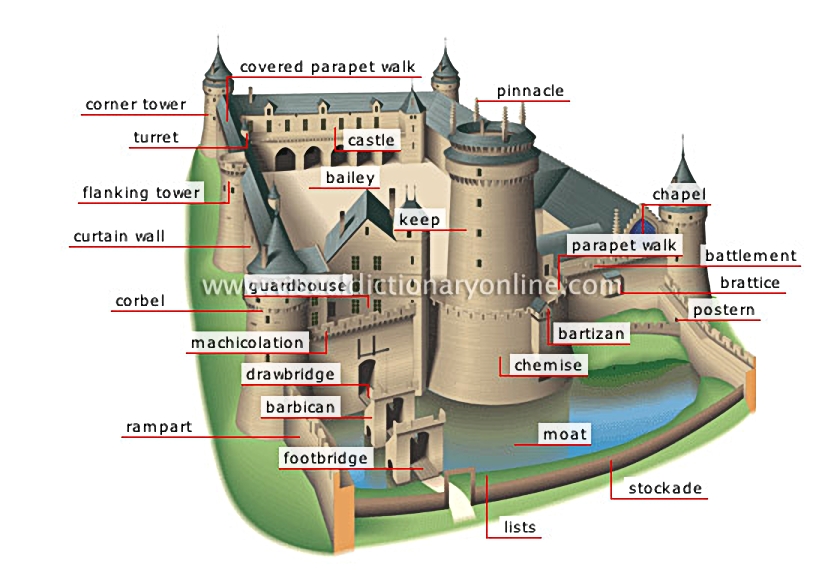
castle 						Area of some size enclosed by a stockade and located around the castle.				  							Wall enclosing the base of the keep to defend it.				  							A sentry box projecting from a wall used to survey the surrounding area.				  							Water-filled trench protecting the castle’s ramparts.				  							The castle’s first line of defense, made up of a row of pickets or boards.				  							Passageway along a wall, making it possible to shoot and perform surveillance.				  							Secret door built into a rampart.				  							Small box or machicolation projecting from the wall to reinforce its defense.				  							Wall allowing defenders of the fortification to fire from a protected position.				  							Place of worship.				  							Castle’s main tower, serving as a final stronghold in the event of attack.				  							Steeple-shaped ornament atop the keep.				  							Narrow bridge used to cross the moat and reach the drawbridge.				  							Freestanding defense with arrow slits used to defend the castle’s footbridge.				  							Thick wall that formed the castle’s outer defense.				  							Movable bridge that was lowered to allow people to cross the moat and raised to prevent access to the castle.				  							Balcony made of masonry with apertures in the floor through which projectiles were dropped on assailants.				  							Structure serving as living quarters for the guards.				  							Stone projection on a wall to support the top of a tower or wall.				  							Stone wall connecting two towers or bastions.				  							Uncovered space bordered by the castle’s buildings and curtain walls.				  							Covered corridor constructed along a battlement and designed to allow the free movement of guards.				  							Defense tower making it possible to fire a shot parallel to the curtain wall.				  							Small watchtower.				  							Apartments of the lord and his family.				  							Circular tower allowing surveillance and defense in all directions.
See Also


armor

lists

Area of some size enclosed by a stockade and located around the castle.

chemise

Wall enclosing the base of the keep to defend it.

bartizan

A sentry box projecting from a wall used to survey the surrounding area.

moat

Water-filled trench protecting the castle’s ramparts.

stockade

The castle’s first line of defense, made up of a row of pickets or boards.

parapet walk

Passageway along a wall, making it possible to shoot and perform surveillance.

postern

Secret door built into a rampart.

brattice

Small box or machicolation projecting from the wall to reinforce its defense.

battlement

Wall allowing defenders of the fortification to fire from a protected position.

chapel

Place of worship.

keep

Castle’s main tower, serving as a final stronghold in the event of attack.

pinnacle

Steeple-shaped ornament atop the keep.

footbridge

Narrow bridge used to cross the moat and reach the drawbridge.

barbican

Freestanding defense with arrow slits used to defend the castle’s footbridge.

rampart

Thick wall that formed the castle’s outer defense.

drawbridge

Movable bridge that was lowered to allow people to cross the moat and raised to prevent access to the castle.

machicolation

Balcony made of masonry with apertures in the floor through which projectiles were dropped on assailants.

guardhouse

Structure serving as living quarters for the guards.

corbel

Stone projection on a wall to support the top of a tower or wall.

curtain wall

Stone wall connecting two towers or bastions.

bailey

Uncovered space bordered by the castle’s buildings and curtain walls.

covered parapet walk

Covered corridor constructed along a battlement and designed to allow the free movement of guards.

flanking tower

Defense tower making it possible to fire a shot parallel to the curtain wall.

turret

Small watchtower.

castle

Apartments of the lord and his family.

corner tower

Circular tower allowing surveillance and defense in all directions.