anatomy of an octopus

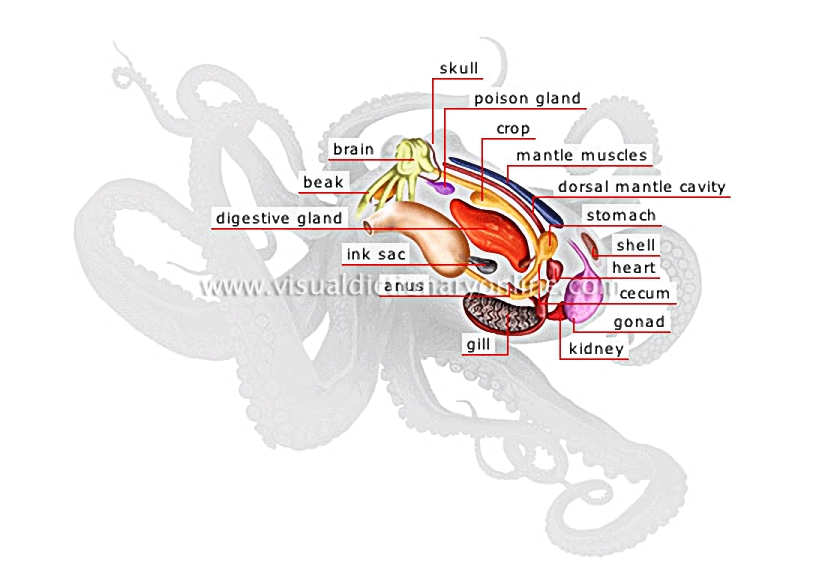
anatomy of an octopus 						Reservoir containing an ink-producing gland; when threatened, the octopus releases the ink through the siphon into the water to hide its flight.				  							Terminal orifice of the digestive tract enabling ejection of fecal matter.				  							Respiratory organ located in the dorsal mantle cavity and covered with ciliated cells; muscles help to circulate water through the gills.				  							Organ secreting urine; it eliminates toxic substances from the body.				  							Muscular organ helping blood to circulate.				  							Genital gland producing spermatozoa (sperm) or ova (eggs), depending on the sex of the mollusk.				  							Lateral canal located in the anterior portion of the intestine where especially a part of digestion and fermentation take place.				  							Dilated section of the digestive tract preceding the intestine; it receives food to be digested.				  							Small internal calcareous structure produced by the mantle; certain species do not have shells.				  							Chamber formed of folds of the mantle; it contains the main organs, especially the gills, and connects to the outside.				  							Muscles contracting to force water out of the dorsal mantle cavity through the siphon and allowing the octopus to propel itself through the water.				  							Organ producing a secretion that contributes to digestion.				  							Large sac located beyond the esophagus, where food is held before being digested in the stomach.				  							Organ producing an acidic secretion that forms the venom, which the octopus injects into its prey through its beak.				  							Corneous formation consisting of a jaw capable of crushing, and allowing the octopus to catch its prey and inject it with venom.				  							Bony structure enclosing and protecting the brain.				  							Main organ of the nervous system; it is located in the head.

See Also


octopus

ink sac

Reservoir containing an ink-producing gland; when threatened, the octopus releases the ink through the siphon into the water to hide its flight.

anus

Terminal orifice of the digestive tract enabling ejection of fecal matter.

gill

Respiratory organ located in the dorsal mantle cavity and covered with ciliated cells; muscles help to circulate water through the gills.

kidney

Organ secreting urine; it eliminates toxic substances from the body.

heart

Muscular organ helping blood to circulate.

gonad

Genital gland producing spermatozoa (sperm) or ova (eggs), depending on the sex of the mollusk.

cecum

Lateral canal located in the anterior portion of the intestine where especially a part of digestion and fermentation take place.

stomach

Dilated section of the digestive tract preceding the intestine; it receives food to be digested.

shell

Small internal calcareous structure produced by the mantle; certain species do not have shells.

dorsal mantle cavity

Chamber formed of folds of the mantle; it contains the main organs, especially the gills, and connects to the outside.

mantle muscles

Muscles contracting to force water out of the dorsal mantle cavity through the siphon and allowing the octopus to propel itself through the water.

digestive gland

Organ producing a secretion that contributes to digestion.

crop

Large sac located beyond the esophagus, where food is held before being digested in the stomach.

poison gland

Organ producing an acidic secretion that forms the venom, which the octopus injects into its prey through its beak.

beak

Corneous formation consisting of a jaw capable of crushing, and allowing the octopus to catch its prey and inject it with venom.
skull

Bony structure enclosing and protecting the brain.

brain

Main organ of the nervous system; it is located in the head.