morphology of a lobster

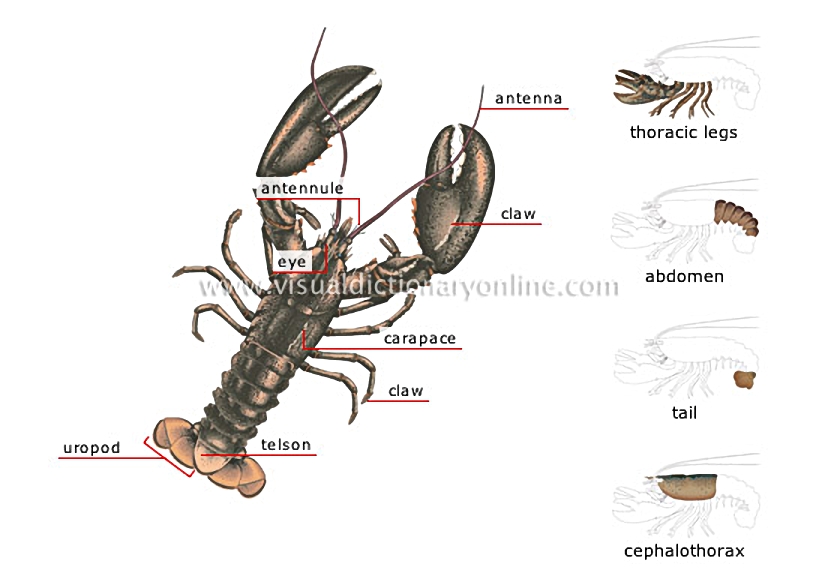
morphology of a lobster 						Very short sensory organ covered with fine hairs and located in front of the head; it has an olfactory function.				  							Articulate appendage located at the terminal end of the first three pairs of legs; it has a prehensile, defensive and, more rarely, motor function.				  							Pointy hook-shaped structure attached to the terminal end of the two last pairs of thoracic legs.				  							Articulated appendage attached to the last abdominal segment before the telson; it is formed of two lobes and helps the lobster to swim.				  							Terminal end of the body having no appendages; the anus is located on its ventral surface. It comprises the central part of the tail.				  							Long sensory organ having a tactile function.				  							Hard covering produced by folds of tissue from the back segments of the head; it protects the body of the lobster.				  							Organ of sight made up of several individual eyes positioned on a movable axis; adapted to low light conditions, it serves mainly to detect motion.				  							Posterior portion of the body formed of six segments and bearing the pleopods, articulated appendages used for swimming, circulating water over the gills and holding the eggs.				  							Meeting of the head and the thorax that forms the anterior portion of the body of the lobster.				  							Articulated limbs attached to the cephalothorax and having a prehensile and motor function; the first three legs bear pincer claws while the last two bear claws.				  							Swimming organ formed of the telson and the two uropods.

See Also


crustaceans

antennule

Very short sensory organ covered with fine hairs and located in front of the head; it has an olfactory function.

claw

Articulate appendage located at the terminal end of the first three pairs of legs; it has a prehensile, defensive and, more rarely, motor function.

claw

Pointy hook-shaped structure attached to the terminal end of the two last pairs of thoracic legs.

uropod

Articulated appendage attached to the last abdominal segment before the telson; it is formed of two lobes and helps the lobster to swim.

telson

Terminal end of the body having no appendages; the anus is located on its ventral surface. It comprises the central part of the tail.

antenna

Long sensory organ having a tactile function.

carapace

Hard covering produced by folds of tissue from the back segments of the head; it protects the body of the lobster.

eye

Organ of sight made up of several individual eyes positioned on a movable axis; adapted to low light conditions, it serves mainly to detect motion.

abdomen

Posterior portion of the body formed of six segments and bearing the pleopods, articulated appendages used for swimming, circulating water over the gills and holding the eggs.

cephalothorax

Meeting of the head and the thorax that forms the anterior portion of the body of the lobster.

thoracic legs

Articulated limbs attached to the cephalothorax and having a prehensile and motor function; the first three legs bear pincer claws while the last two bear claws.
tail

Swimming organ formed of the telson and the two uropods.