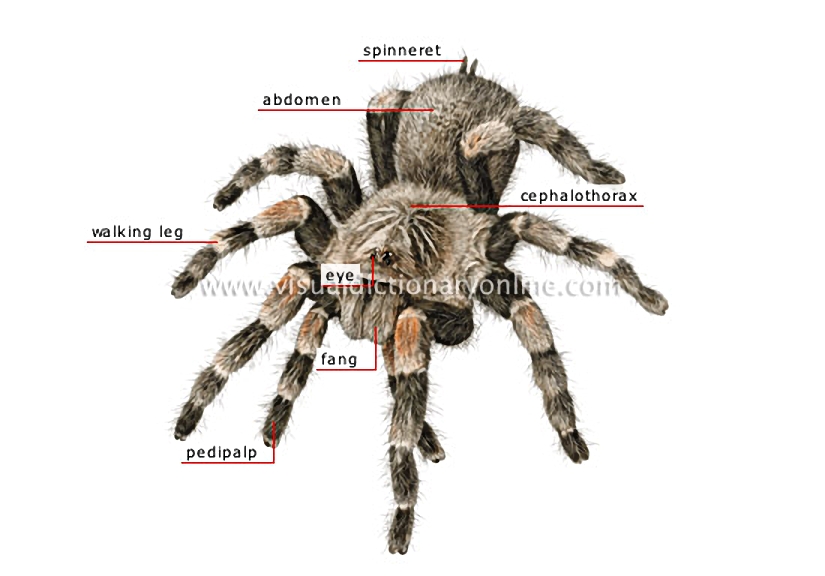
morphology of a spider

morphology of a spider 						Member similar to a walking leg and having a tactile and prehensile function; a spider has two.				  							Curved part below the eyes and attached to the venom gland; it allows the spider to catch its prey to inject it with venom.				  							Meeting point of the head and the thorax forming the anterior portion of the spider’s body.				  							Posterior portion of the body of a spider containing the main vital organs, including the heart, the intestines and the genital organs.				  							Appendage located near the anus, where the silk glands end; the spider generally has three pairs.				  							Organ of vision joined to the brain by a nerve; the spider usually has four pairs of simple eyes.				  							Articulated member supporting the body and allowing the spider to move; a spider usually has eight.
See Also


examples of arachnids

pedipalp

Member similar to a walking leg and having a tactile and prehensile function; a spider has two.

fang

Curved part below the eyes and attached to the venom gland; it allows the spider to catch its prey to inject it with venom.

cephalothorax

Meeting point of the head and the thorax forming the anterior portion of the spider’s body.

abdomen

Posterior portion of the body of a spider containing the main vital organs, including the heart, the intestines and the genital organs.

spinneret

Appendage located near the anus, where the silk glands end; the spider generally has three pairs.

eye

Organ of vision joined to the brain by a nerve; the spider usually has four pairs of simple eyes.

walking leg

Articulated member supporting the body and allowing the spider to move; a spider usually has eight.