egg

Reproductive method of certain animal species: a living cell with a casing and a food reserve, produced by the female.
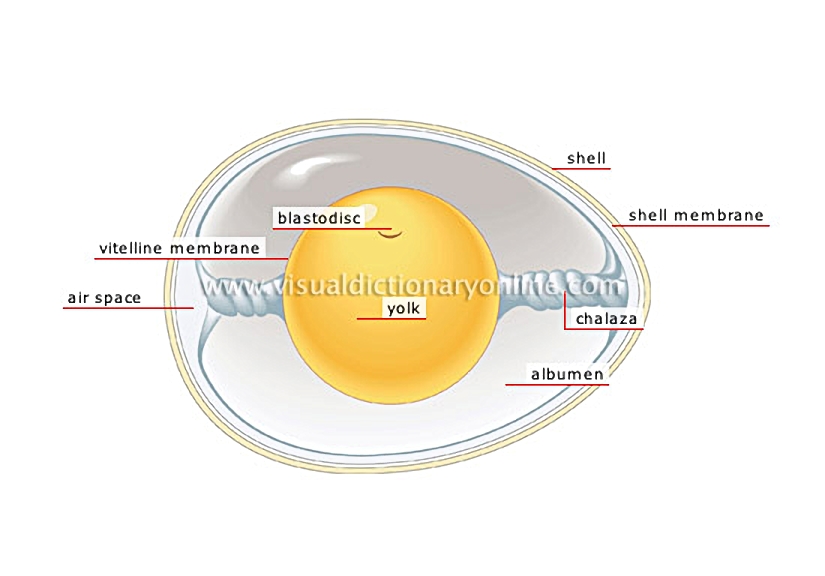
egg 						Viscous liquid substance, popularly known as white of egg, surrounding the yolk and containing water and the proteins the embryo requires.				  							Spiral filament of albumen maintaining the yolk in the center of the egg.				  							The embryo’s food reserve located in the center of the egg.				  							Pocket of air contained between the two layers of the shell membrane at the base of the egg; it forms once the egg has cooled after being laid.				  							Thin flexible transparent tissue enveloping the yolk.				  							Flexible porous tissue made of two superimposed layers covering the inside of the shell; it contributes to respiration and fights bacteria.				  							Hard porous calcareous casing of the egg; it provides protection, fights bacteria and helps respiration.				  							Evidence of fertilization of the egg on the surface of the vitelline membrane; the embryo grows from it.
See Also


eggs

albumen

Viscous liquid substance, popularly known as white of egg, surrounding the yolk and containing water and the proteins the embryo requires.

chalaza

Spiral filament of albumen maintaining the yolk in the center of the egg.

yolk

The embryo’s food reserve located in the center of the egg.

air space

Pocket of air contained between the two layers of the shell membrane at the base of the egg; it forms once the egg has cooled after being laid.

vitelline membrane

Thin flexible transparent tissue enveloping the yolk.

shell membrane

Flexible porous tissue made of two superimposed layers covering the inside of the shell; it contributes to respiration and fights bacteria.

shell

Hard porous calcareous casing of the egg; it provides protection, fights bacteria and helps respiration.

blastodisc

Evidence of fertilization of the egg on the surface of the vitelline membrane; the embryo grows from it.