anatomy of a bird

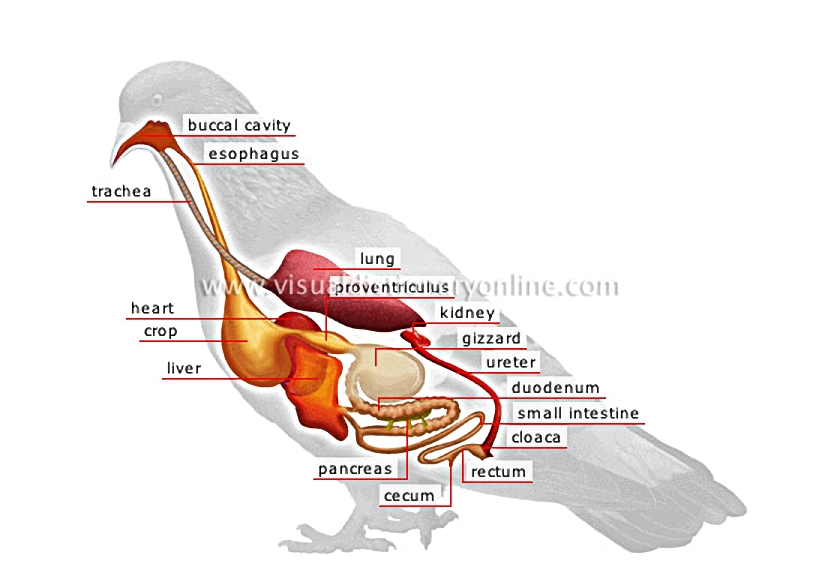
anatomy of a bird 						Canal in the anterior part of the digestive tract; it carries food to the crop.				  							Muscular pouch behind the proventriculus in which food is ground with the help of stones swallowed by the bird before being digested.				  							Respiratory organ made up of an extensible tissue and forming a sac; air from the buccal cavity flows into it.				  							Organ secreting urine; it eliminates toxic substances from the body.				  							Long canal originating in the kidney and carrying urine to the cloaca.				  							Digestive gland connected to the duodenum and producing digestive enzymes and hormones.				  							Long narrow portion of the digestive tract behind the duodenum where part of digestion and food absorption takes place.				  							Orifice common to the intestine and the genital and urinary tracts; it is located at the terminal end of the digestive tract.				  							Lateral canal located in the anterior portion of the intestine where especially a part of digestion and fermentation take place.				  							Terminal end of the intestine before the cloaca.				  							Anterior portion of the small intestine into which secretions from the liver and pancreas empty.				  							Gland secreting mostly a substance (bile) that contributes to digestion.				  							Portion of the digestive tract opening out into the gizzard and secreting substances that help digestion.				  							Large bulge at the back of the esophagus; it can dilate to receive food.				  							Muscular organ helping blood to circulate.				  							Muscular cartilaginous canal carrying air from the buccal cavity to the lungs.				  							Anterior portion of the digestive tract containing the tongue and the salivary glands.
See Also


examples of birds?[1]

esophagus

Canal in the anterior part of the digestive tract; it carries food to the crop.

gizzard

Muscular pouch behind the proventriculus in which food is ground with the help of stones swallowed by the bird before being digested.

lung

Respiratory organ made up of an extensible tissue and forming a sac; air from the buccal cavity flows into it.

kidney

Organ secreting urine; it eliminates toxic substances from the body.

ureter

Long canal originating in the kidney and carrying urine to the cloaca.

pancreas

Digestive gland connected to the duodenum and producing digestive enzymes and hormones.

small intestine

Long narrow portion of the digestive tract behind the duodenum where part of digestion and food absorption takes place.

cloaca

Orifice common to the intestine and the genital and urinary tracts; it is located at the terminal end of the digestive tract.

cecum

Lateral canal located in the anterior portion of the intestine where especially a part of digestion and fermentation take place.

rectum

Terminal end of the intestine before the cloaca.

duodenum

Anterior portion of the small intestine into which secretions from the liver and pancreas empty.

liver

Gland secreting mostly a substance (bile) that contributes to digestion.

proventriculus

Portion of the digestive tract opening out into the gizzard and secreting substances that help digestion.

crop

Large bulge at the back of the esophagus; it can dilate to receive food.

heart

Muscular organ helping blood to circulate.

trachea

Muscular cartilaginous canal carrying air from the buccal cavity to the lungs.

buccal cavity

Anterior portion of the digestive tract containing the tongue and the salivary glands.