motorcycle

Two-wheeled motorized vehicle whose engine cylinder is larger than 125 cubic centimeters.
motorcycle 						Device emitting an intermittent light, signaling a change of the vehicle’s direction or a temporary hazard to other vehicles.				  							Reservoir containing the fuel that makes the vehicle self-sufficient.												Device converting the combustion of fuel and air into mechanical energy.				  							Engine mechanism that prepares the air/fuel mixture.				  							Partly aesthetic aerodynamic part that deflects air away from the front wheel.				  							Braking mechanism comprising a disc attached to the wheel, whose rotation is slowed down when the brake pads exert friction on it.				  							Metal circle constituting the wheel’s circumference and on which the tire is mounted.				  							Viselike part comprising a piston, which straddles the brake disc and supports the brake pads.				  							Aerodynamic parts covering certain components of the motorcycle to reduce air friction and driver discomfort.				  							Pair of tubes sliding together and encasing a spring; it controls steering, suspension and shock absorption for the front wheel.				  							Piece of curved metal covering the front wheel, protecting the motorcyclist from being splashed.				  							Lamp on the front of the vehicle to light up the space in front.				  							Body component containing the instrument panel and the light switch.				  							Lever for disengaging then engaging the engine and the gearbox, allowing the gears to be changed.				  							Extension of the handlebars that the driver holds to steer the motorcycle.				  							Glass and plastic pane in front, protecting the motorcyclist from the wind and inclement weather.				  							Mirror attached to the handgrip, allowing the motorcyclist to see behind and along the sides of the vehicle without turning around.				  							Usually leather seat allowing the driver to sit in front and the passenger to sit behind.				  							Set of hollow metal tubes welded together, forming the motorcycle’s framework.				  							Lamp that lights up automatically when the front lights are lit and emits a brighter light when the driver applies the brakes.				  							Device emitting an intermittent light, signaling a change of the vehicle’s direction or a temporary hazard to other vehicles.				  							Cylindrical mechanism attached to the rear wheel and coupled with a spring; it absorbs shocks caused by unevenness in the road.				  							Fold-down support comprising two rods; it keeps the motorcycle upright with one of its wheels off the ground.				  							Compartmentalized chamber in which the escaping gases expand, thus reducing the noise from the engine.				  							Metal rods, one on each side of the motorcycle frame, for resting the passenger’s feet on.				  							Pedal located under the motorcyclist’s left foot, for changing the ratio between the motor’s speed of rotation and that of the wheels.				  							Fold-down support on the left side of the motorcycle to keep it almost upright when at rest.				  							Metal rods, one on each side of the motorcycle frame, for resting the driver’s feet on.

See Also


gasoline pump

turn signal

Device emitting an intermittent light, signaling a change of the vehicle’s direction or a temporary hazard to other vehicles.

gas tank

Reservoir containing the fuel that makes the vehicle self-sufficient.
gasoline pump
gasoline pump

engine

Device converting the combustion of fuel and air into mechanical energy.

carburetor

Engine mechanism that prepares the air/fuel mixture.

spoiler

Partly aesthetic aerodynamic part that deflects air away from the front wheel.

disc brake

Braking mechanism comprising a disc attached to the wheel, whose rotation is slowed down when the brake pads exert friction on it.

rim

Metal circle constituting the wheel’s circumference and on which the tire is mounted.

brake caliper

Viselike part comprising a piston, which straddles the brake disc and supports the brake pads.

fairing

Aerodynamic parts covering certain components of the motorcycle to reduce air friction and driver discomfort.

telescopic front fork

Pair of tubes sliding together and encasing a spring; it controls steering, suspension and shock absorption for the front wheel.

front fender

Piece of curved metal covering the front wheel, protecting the motorcyclist from being splashed.

headlight

Lamp on the front of the vehicle to light up the space in front.

dashboard

Body component containing the instrument panel and the light switch.

clutch lever

Lever for disengaging then engaging the engine and the gearbox, allowing the gears to be changed.

handgrip

Extension of the handlebars that the driver holds to steer the motorcycle.

windshield

Glass and plastic pane in front, protecting the motorcyclist from the wind and inclement weather.

mirror

Mirror attached to the handgrip, allowing the motorcyclist to see behind and along the sides of the vehicle without turning around.

dual seat

Usually leather seat allowing the driver to sit in front and the passenger to sit behind.

frame

Set of hollow metal tubes welded together, forming the motorcycle’s framework.

taillight

Lamp that lights up automatically when the front lights are lit and emits a brighter light when the driver applies the brakes.

turn signal

Device emitting an intermittent light, signaling a change of the vehicle’s direction or a temporary hazard to other vehicles.

rear shock absorber

Cylindrical mechanism attached to the rear wheel and coupled with a spring; it absorbs shocks caused by unevenness in the road.

main stand

Fold-down support comprising two rods; it keeps the motorcycle upright with one of its wheels off the ground.

exhaust pipe

Compartmentalized chamber in which the escaping gases expand, thus reducing the noise from the engine.

pillion footrest

Metal rods, one on each side of the motorcycle frame, for resting the passenger’s feet on.

gearshift lever

Pedal located under the motorcyclist’s left foot, for changing the ratio between the motor’s speed of rotation and that of the wheels.

kickstand

Fold-down support on the left side of the motorcycle to keep it almost upright when at rest.
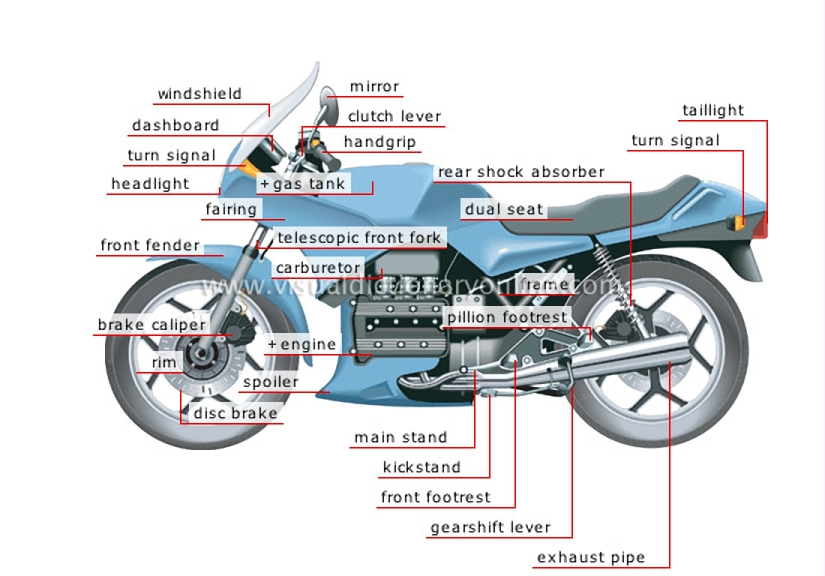
front footrest

Metal rods, one on each side of the motorcycle frame, for resting the driver’s feet on.