sheet

Ice surface on which a match is played; when an end is complete, the next end starts from the opposite end of the sheet.
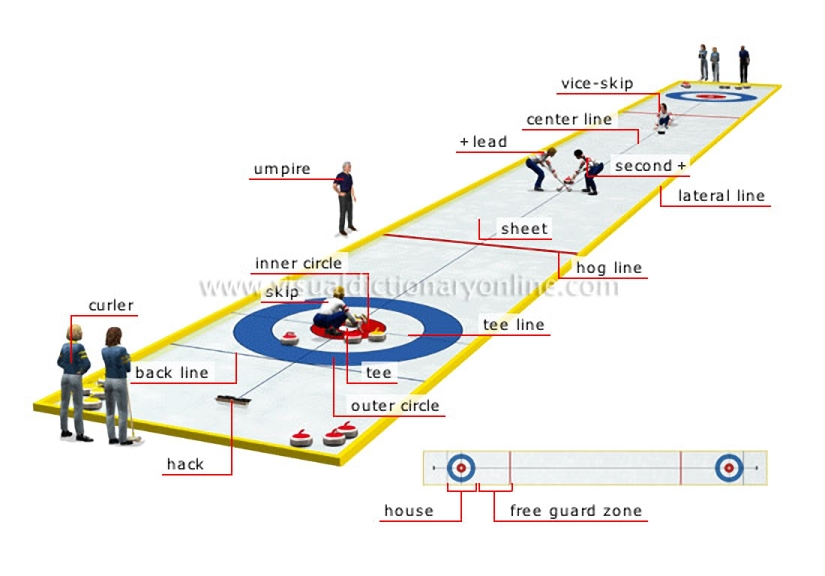
sheet 						Official who is responsible for applying the rules; in particular, the umpire rules on the correctness of throws and determines the distance between the stones and the tee.				  							Line across the center of the house; behind this line, players are allowed to brush in front of an opponent’s stone in an effort to make it overshoot the house.				  							Surface of the ice; it is watered regularly with fine droplets to reduce friction between the ice and the stone.				  							Circle forming the center of the house; once all the stones are thrown, the team with the stone closest to the tee wins the end.				  							Player who assists the skip in devising playing tactics; the vice-skip usually throws third in an end.				  							Player who leads the team and determines strategy; the skip is usually the last to throw in an end.				  							Rubber foothold at each end of the sheet that the thrower uses to push off.				  							Curling player who throws two stones in each of the 10 ends that make up a match.				  							Circle surrounding the tee.				  							Circle forming the outer limit of the house.				  							Band or line that delimits the sides of the sheet; a stone that strikes the lateral line is removed from play.				  							Line that divides the sheet in half; the stone is thrown and released relatively close to this line.				  							Line at the front of the house that marks the boundary of the playing area; the stones must be released before this line and must cross the opposite hog line to remain in play.				  							Line at the back of the house that marks the boundary of the playing area; a stone that crosses this line is removed from play.				  							First player to throw stones in an end.												Second player to throw stones in an end.												Area between the house and the hog line; leads may not remove the opposing team’s stones from play.				  							Series of concentric circles forming the scoring zone; a point is scored for each stone that lies closer to the tee than the opposing team’s stones.
See Also


curling brush

curling stone

umpire

Official who is responsible for applying the rules; in particular, the umpire rules on the correctness of throws and determines the distance between the stones and the tee.

tee line

Line across the center of the house; behind this line, players are allowed to brush in front of an opponent’s stone in an effort to make it overshoot the house.

sheet

Surface of the ice; it is watered regularly with fine droplets to reduce friction between the ice and the stone.

tee

Circle forming the center of the house; once all the stones are thrown, the team with the stone closest to the tee wins the end.

vice-skip

Player who assists the skip in devising playing tactics; the vice-skip usually throws third in an end.

skip

Player who leads the team and determines strategy; the skip is usually the last to throw in an end.

hack

Rubber foothold at each end of the sheet that the thrower uses to push off.

curler

Curling player who throws two stones in each of the 10 ends that make up a match.

inner circle

Circle surrounding the tee.

outer circle

Circle forming the outer limit of the house.

lateral line

Band or line that delimits the sides of the sheet; a stone that strikes the lateral line is removed from play.

center line

Line that divides the sheet in half; the stone is thrown and released relatively close to this line.

hog line

Line at the front of the house that marks the boundary of the playing area; the stones must be released before this line and must cross the opposite hog line to remain in play.

back line

Line at the back of the house that marks the boundary of the playing area; a stone that crosses this line is removed from play.

lead

First player to throw stones in an end.
curling brush
curling brush

second

Second player to throw stones in an end.
curling brush
curling brush

free guard zone

Area between the house and the hog line; leads may not remove the opposing team’s stones from play.

house

Series of concentric circles forming the scoring zone; a point is scored for each stone that lies closer to the tee than the opposing team’s stones.