snowmobile

Motorized vehicle with a track and skis for moving rapidly on snow; some snowmobiles reach speeds of 125 mph.
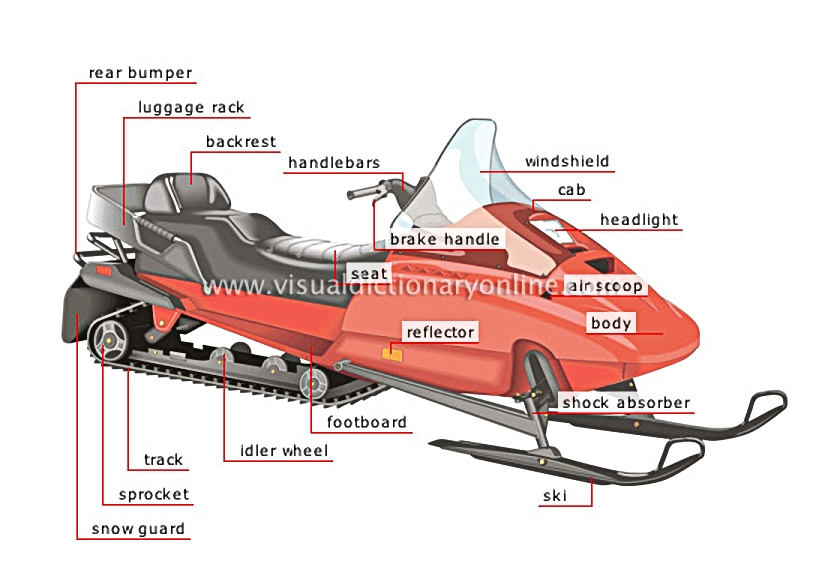
snowmobile 						Relatively wide blade that is attached to the front of the snowmobile and allows it to glide on snow; the skis are steered by the handlebars.				  							Opening for letting the outside air in to cool the engine.				  							Snowmobile structure that houses and protects the mechanical components.				  							Cylindrical device that is attached to the ski and coupled with a spring; it absorbs shocks caused by unevenness on the snow.				  							Step used to board the snowmobile.				  							Device that reflects light back to its source to make the snowmobile visible at night.				  							Rubber or plastic part attached to the rear of the track that protects against flying snow.				  							Wheel with teeth, which make successive contact with the track teeth to transmit its motion and propel the snowmobile.				  							Belt into which the sprockets mesh; it provides the snowmobile’s traction.				  							Wheel that keeps the track taut.				  							Lamp on the front of the vehicle to light up the space in front.				  							Lidlike part of the body that covers and protects the engine.				  							Resistant glass and plastic panel that protects the operator from the wind and inclement weather.				  							Device made up of two handles that the operator manipulates to steer the snowmobile.				  							Lever the operator activates to slow down or stop the snowmobile.				  							Seat, usually made of leather, on which the operator sits; a passenger can sit behind the operator.				  							Part supporting the passenger’s lower back.				  							Structure attached to the rear of the snowmobile for transporting baggage.				  							Malleable component attached to the rear of the snowmobile to dampen impact in the event of collision; it also acts as a handle for moving the snowmobile.

ski

Relatively wide blade that is attached to the front of the snowmobile and allows it to glide on snow; the skis are steered by the handlebars.

air scoop

Opening for letting the outside air in to cool the engine.

body

Snowmobile structure that houses and protects the mechanical components.

shock absorber

Cylindrical device that is attached to the ski and coupled with a spring; it absorbs shocks caused by unevenness on the snow.

footboard

Step used to board the snowmobile.

reflector

Device that reflects light back to its source to make the snowmobile visible at night.

snow guard

Rubber or plastic part attached to the rear of the track that protects against flying snow.

sprocket

Wheel with teeth, which make successive contact with the track teeth to transmit its motion and propel the snowmobile.

track

Belt into which the sprockets mesh; it provides the snowmobile’s traction.

idler wheel

Wheel that keeps the track taut.

headlight

Lamp on the front of the vehicle to light up the space in front.

cab

Lidlike part of the body that covers and protects the engine.

windshield

Resistant glass and plastic panel that protects the operator from the wind and inclement weather.

handlebars

Device made up of two handles that the operator manipulates to steer the snowmobile.

brake handle

Lever the operator activates to slow down or stop the snowmobile.

seat

Seat, usually made of leather, on which the operator sits; a passenger can sit behind the operator.

backrest

Part supporting the passenger’s lower back.

luggage rack

Structure attached to the rear of the snowmobile for transporting baggage.

rear bumper

Malleable component attached to the rear of the snowmobile to dampen impact in the event of collision; it also acts as a handle for moving the snowmobile.