pacer

A horse that paces, that is, raising both legs on the right side, then, as those legs come down, raising both legs on the left side.
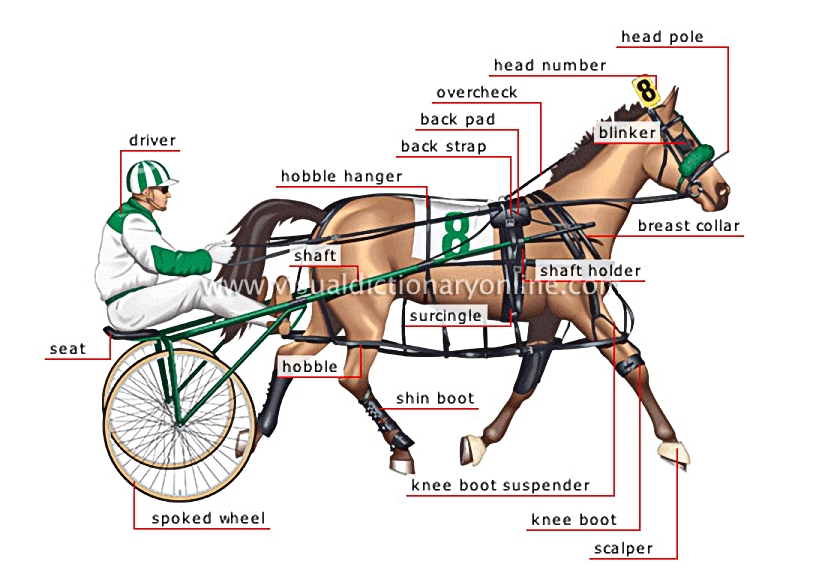
pacer 						Wooden or metal arm that extends the sulky; the horse is harnessed between the two of them.				  							Person who steers the horse; the driver’s main task is to restrain the horse to conserve its energy for the right moment.				  							Strap that goes around the horse’s wither; it keeps its knee boot in place.				  							Round unit that is held by fine metal rods radiating from an axle; it allows the sulky to move.				  							Part on which the driver sits to steer the sulky.				  							Equipment placed around the cannon of the horse’s leg to protect it from injury.				  							Set of straps on each side of the horse that connect the forelegs and hind legs; they help the horse maintain the pace.				  							One of four straps that support the hobble.				  							Strap that attaches the shaft to the horse’s harness.				  							Strap that goes under the horse’s belly; it keeps the back pad and shaft holder in place.				  							Usually rubber item of equipment that covers the horse’s hoof to prevent injury.				  							Rigid equipment that protects the horse’s knee.				  							Part of the harness that goes around the horse’s neck; it transmits the horse’s movement to the shaft.				  							Padded part set on the horse’s back; the back strap goes over it.				  							Stick attached along the horse’s head; it prevents the horse from turning its head during turns.				  							Rigid part that is attached to the cheek strap; it reduces the horse’s lateral vision.				  							Numbered plate that is attached to the horse’s head for identification by the public and the judges.				  							Strap that connects the bridle to the back pad; it lifts the horse’s head so it maintains the pace.				  							Reinforced strap that is attached to the back pad; it is fitted with girths that can be attached to the shafts.
See Also


racetrack

shaft

Wooden or metal arm that extends the sulky; the horse is harnessed between the two of them.

driver

Person who steers the horse; the driver’s main task is to restrain the horse to conserve its energy for the right moment.

knee boot suspender

Strap that goes around the horse’s wither; it keeps its knee boot in place.

spoked wheel

Round unit that is held by fine metal rods radiating from an axle; it allows the sulky to move.

seat

Part on which the driver sits to steer the sulky.

shin boot

Equipment placed around the cannon of the horse’s leg to protect it from injury.

hobble

Set of straps on each side of the horse that connect the forelegs and hind legs; they help the horse maintain the pace.

hobble hanger

One of four straps that support the hobble.

shaft holder

Strap that attaches the shaft to the horse’s harness.

surcingle

Strap that goes under the horse’s belly; it keeps the back pad and shaft holder in place.

scalper

Usually rubber item of equipment that covers the horse’s hoof to prevent injury.

knee boot

Rigid equipment that protects the horse’s knee.

breast collar

Part of the harness that goes around the horse’s neck; it transmits the horse’s movement to the shaft.

back pad

Padded part set on the horse’s back; the back strap goes over it.

head pole

Stick attached along the horse’s head; it prevents the horse from turning its head during turns.

blinker

Rigid part that is attached to the cheek strap; it reduces the horse’s lateral vision.

head number

Numbered plate that is attached to the horse’s head for identification by the public and the judges.

overcheck

Strap that connects the bridle to the back pad; it lifts the horse’s head so it maintains the pace.

back strap

Reinforced strap that is attached to the back pad; it is fitted with girths that can be attached to the shafts.