scuba diver

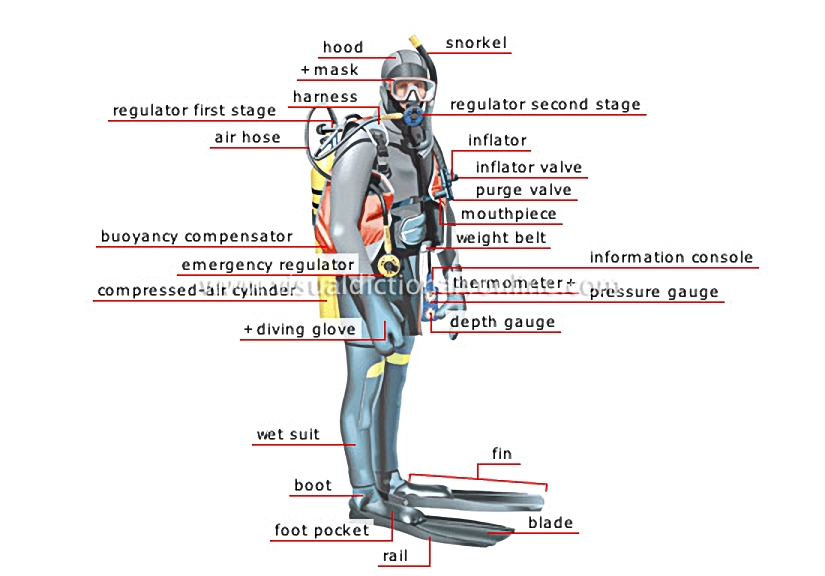
Person who practices scuba diving; the diver wears diving gear and carries equipment that makes it possible to stay underwater for as long as the air supply lasts.
scuba diver 						Rubber or plastic flipper that is attached to the foot and improves the diver’s propulsion in the water.				  							Apparatus that changes the pressure of the air coming from the regulator first stage to the pressure of the ambient air; the diver breathes this air in through a mouthpiece.				  							Apparatus that inflates the buoyancy compensator; it often includes a mechanical system attached to the regulator as well as a mouthpiece for inflating it manually.				  							Unit that controls the amount of air entering the buoyancy compensator.				  							Part for inflating the buoyancy compensator by blowing.				  							Device for releasing air from the buoyancy compensator.				  							Ergonomic box that houses various measuring devices, which are useful to the diver.				  							Instrument for measuring the water’s temperature.				  							Apparatus for measuring the cylinder’s air pressure; this indicates to the diver how much air is available.				  							Apparatus indicating the diver’s depth.				  							Thrusting part of the fin that is an extension of the foot pocket; its length and stiffness determine its thrusting power.				  							Side reinforcement of the fin; it makes the blade stiffer and improves the fin’s efficiency.				  							Part of the fin that covers the foot; it can be open at the heel and have an adjustable strap or be entirely closed.				  							Synthetic rubber boot that protects the foot and ankle from the cold and from being rubbed by the fin.				  							Insulating outfit made out of synthetic rubber; a small amount of water is usually allowed to seep in and assume the diver’s body temperature.				  							Piece of synthetic rubber that covers the hand and wrist to protect them from the cold and from being hurt by underwater objects, plants and animals.												Regulator second stage that is connected by a hose to the regulator first stage; it is used to supply air to a diver in difficulty.				  							Device containing air of diminished volume due to pressure; it stores air that can be used by the diver to move underwater.				  							Float device whose volume of air can be increased or decreased at will to stabilize the diver underwater; it can be used to return to the surface and to keep afloat without effort.				  							Fabric sash worn around the waist; it contains a variable number of weights to compensate for the diver’s natural flotation.				  							Flexible tube that connects the regulator first stage to the emergency regulator.				  							Apparatus attached to the cylinder valve that lowers the air pressure coming from the cylinder to an intermediate value (medium pressure).				  							Piece of equipment with straps and suspenders; the diver uses it to carry one or more cylinders of compressed air on the back.				  							Watertight part that is made up of glass surrounded by a rubber skirt; it covers the nose and eyes and provides good visibility underwater.				  							Synthetic rubber cap that covers the head and neck to protect them against the cold.				  							Rigid or flexible tube that enables the diver to breathe from just under the surface without lifting the head out of the water; it provides a comfortable and efficient position for swimming.
See Also


hand

fin

Rubber or plastic flipper that is attached to the foot and improves the diver’s propulsion in the water.

regulator second stage

Apparatus that changes the pressure of the air coming from the regulator first stage to the pressure of the ambient air; the diver breathes this air in through a mouthpiece.

inflator

Apparatus that inflates the buoyancy compensator; it often includes a mechanical system attached to the regulator as well as a mouthpiece for inflating it manually.

inflator valve

Unit that controls the amount of air entering the buoyancy compensator.

mouthpiece

Part for inflating the buoyancy compensator by blowing.

purge valve

Device for releasing air from the buoyancy compensator.

information console

Ergonomic box that houses various measuring devices, which are useful to the diver.

thermometer

Instrument for measuring the water’s temperature.

pressure gauge

Apparatus for measuring the cylinder’s air pressure; this indicates to the diver how much air is available.

depth gauge

Apparatus indicating the diver’s depth.

blade

Thrusting part of the fin that is an extension of the foot pocket; its length and stiffness determine its thrusting power.

rail

Side reinforcement of the fin; it makes the blade stiffer and improves the fin’s efficiency.

foot pocket

Part of the fin that covers the foot; it can be open at the heel and have an adjustable strap or be entirely closed.

boot

Synthetic rubber boot that protects the foot and ankle from the cold and from being rubbed by the fin.

wet suit

Insulating outfit made out of synthetic rubber; a small amount of water is usually allowed to seep in and assume the diver’s body temperature.

diving glove

Piece of synthetic rubber that covers the hand and wrist to protect them from the cold and from being hurt by underwater objects, plants and animals.
hand
hand

emergency regulator

Regulator second stage that is connected by a hose to the regulator first stage; it is used to supply air to a diver in difficulty.

compressed-air cylinder

Device containing air of diminished volume due to pressure; it stores air that can be used by the diver to move underwater.

buoyancy compensator

Float device whose volume of air can be increased or decreased at will to stabilize the diver underwater; it can be used to return to the surface and to keep afloat without effort.

weight belt

Fabric sash worn around the waist; it contains a variable number of weights to compensate for the diver’s natural flotation.

air hose

Flexible tube that connects the regulator first stage to the emergency regulator.

regulator first stage

Apparatus attached to the cylinder valve that lowers the air pressure coming from the cylinder to an intermediate value (medium pressure).

harness

Piece of equipment with straps and suspenders; the diver uses it to carry one or more cylinders of compressed air on the back.

mask

Watertight part that is made up of glass surrounded by a rubber skirt; it covers the nose and eyes and provides good visibility underwater.

hood

Synthetic rubber cap that covers the head and neck to protect them against the cold.

snorkel

Rigid or flexible tube that enables the diver to breathe from just under the surface without lifting the head out of the water; it provides a comfortable and efficient position for swimming.