sailboard

Floating board with a sail; it is used in windsurfing, a sport consisting of gliding on water.
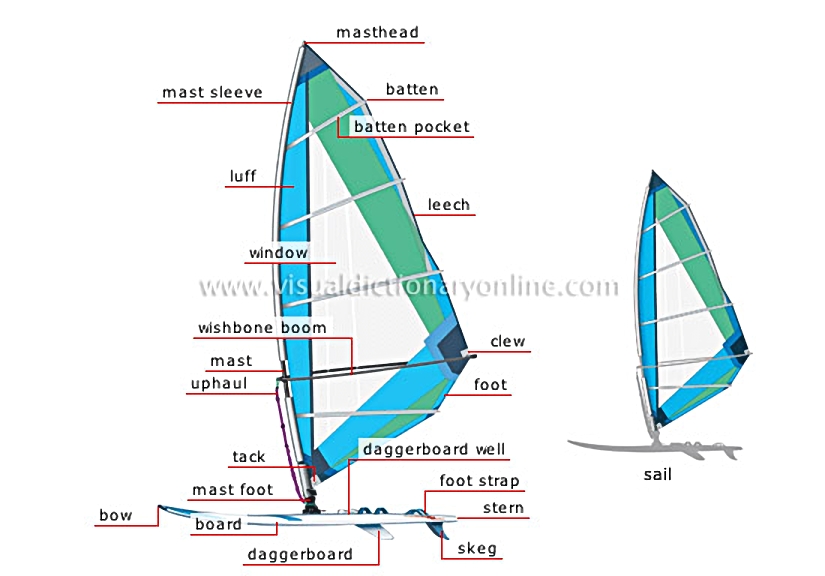
sailboard 						Forward part of the board; it curves slightly upward.				  							Usually retractable, vertical skeg that keeps the board on course.				  							Part of the sail that slips over the mast; it has an opening for the wishbone boom, where it is attached to the mast.				  							Front edge of the sail; it is located along the mast sleeve.				  							Transparent section through which the windsurfer can see any objects or boats on the other side of the sail.				  							Metal or carbon hoop that is attached to the mast at one end and the clew at the other; it directs the sail and helps the windsurfer stay balanced.				  							Long vertical part that is sometimes slightly inclined; it supports the wishbone boom and the sail.				  							Knotted rope that runs from the wishbone boom to the mast foot; it is used for righting the sail when it is in the water.				  							Point that forms the front lower angle of the sail; it is attached to the foot of the mast sleeve.				  							Articulated part that connects the mast to the board; it allows the mast and sail to pivot.				  							Floating device made of synthetic material on which the windsurfer rides; its shape varies depending on its use (racing, slalom, waves, jumping).				  							One of the triangular parts aft and under the board that stabilize its course; the shorter the skegs, the easier the board is to handle.				  							Back part of the board.				  							Belt attached to the board to hold the windsurfer’s foot in place; this provides maximum control of the board, especially against strong winds and waves.				  							Slot running through the board into which the daggerboard slides.				  							Lower part of the sail between the clew and the tack.				  							Point forming the small angle at the back of the sail; it is attached to the wishbone boom.				  							Aft edge of the sail between the masthead and the clew.				  							Slot into which a batten is slipped.				  							Top end of the mast.				  							Rigid pole inserted into the sail’s batten pockets to maintain its shape.				  							Assembly of fabric or plastic sections that is rigged on a mast; it forms a surface that allows the board to sail with the wind.
See Also


surfboard

bow

Forward part of the board; it curves slightly upward.

daggerboard

Usually retractable, vertical skeg that keeps the board on course.

mast sleeve

Part of the sail that slips over the mast; it has an opening for the wishbone boom, where it is attached to the mast.

luff

Front edge of the sail; it is located along the mast sleeve.

window

Transparent section through which the windsurfer can see any objects or boats on the other side of the sail.

wishbone boom

Metal or carbon hoop that is attached to the mast at one end and the clew at the other; it directs the sail and helps the windsurfer stay balanced.

mast

Long vertical part that is sometimes slightly inclined; it supports the wishbone boom and the sail.

uphaul

Knotted rope that runs from the wishbone boom to the mast foot; it is used for righting the sail when it is in the water.

tack

Point that forms the front lower angle of the sail; it is attached to the foot of the mast sleeve.

mast foot

Articulated part that connects the mast to the board; it allows the mast and sail to pivot.

board

Floating device made of synthetic material on which the windsurfer rides; its shape varies depending on its use (racing, slalom, waves, jumping).

skeg

One of the triangular parts aft and under the board that stabilize its course; the shorter the skegs, the easier the board is to handle.

stern

Back part of the board.

foot strap

Belt attached to the board to hold the windsurfer’s foot in place; this provides maximum control of the board, especially against strong winds and waves.

daggerboard well

Slot running through the board into which the daggerboard slides.

foot

Lower part of the sail between the clew and the tack.

clew

Point forming the small angle at the back of the sail; it is attached to the wishbone boom.

leech

Aft edge of the sail between the masthead and the clew.

batten pocket

Slot into which a batten is slipped.

masthead

Top end of the mast.

batten

Rigid pole inserted into the sail’s batten pockets to maintain its shape.

sail

Assembly of fabric or plastic sections that is rigged on a mast; it forms a surface that allows the board to sail with the wind.