types of oars

Oar: instrument that is made up of a slightly curved blade, which is connected to a long shaft; it propels the boat.
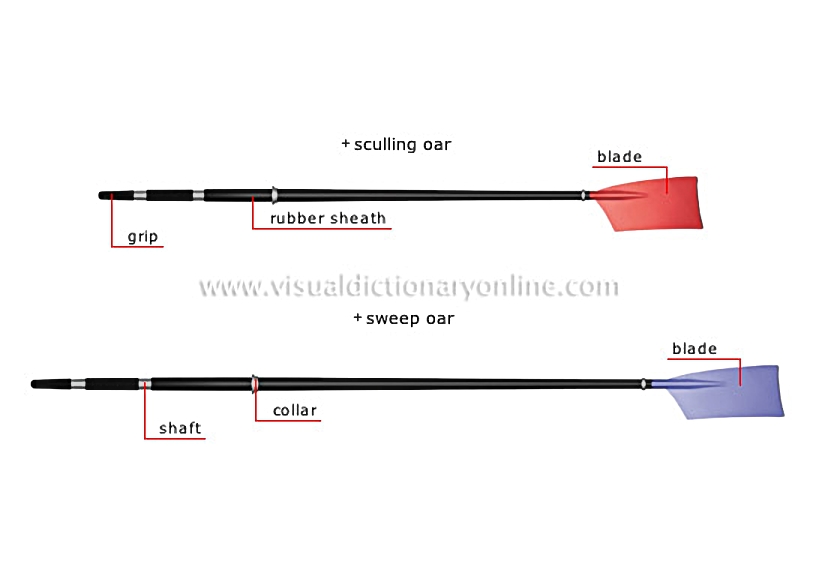
types of oars 						Short oar that is manipulated with one arm; it is used in tandem with a second oar to propel a sculling boat.												Plastic or rubber casing that covers and protects the shaft; the collar is mounted on it.				  							End of the oar that is gripped by the rower.				  							Larger end of the oar that is thrust into the water to propel the boat; it is often asymmetrical in order to maximize its hold in the water.				  							Oar that is manipulated with both arms and is used to propel a sweep boat; it is longer than a sculling oar and has a larger blade.												Ring that is mounted on the rubber sheath and rests on the oarlock to prevent the oar from slipping; it can be moved to change its leverage effect.				  							Elongated part that is usually made of wood or carbon; the blade is attached to it.				  							Larger end of the oar that is thrust into the water to propel the boat; it is often asymmetrical in order to maximize its hold in the water.
See Also


sculling boats

sweep boats

sculling oar

Short oar that is manipulated with one arm; it is used in tandem with a second oar to propel a sculling boat.
sculling boats
sculling boats

rubber sheath

Plastic or rubber casing that covers and protects the shaft; the collar is mounted on it.

grip

End of the oar that is gripped by the rower.

blade

Larger end of the oar that is thrust into the water to propel the boat; it is often asymmetrical in order to maximize its hold in the water.

sweep oar

Oar that is manipulated with both arms and is used to propel a sweep boat; it is longer than a sculling oar and has a larger blade.
sweep boats
sweep boats

collar

Ring that is mounted on the rubber sheath and rests on the oarlock to prevent the oar from slipping; it can be moved to change its leverage effect.

shaft

Elongated part that is usually made of wood or carbon; the blade is attached to it.

blade

Larger end of the oar that is thrust into the water to propel the boat; it is often asymmetrical in order to maximize its hold in the water.