whitewater
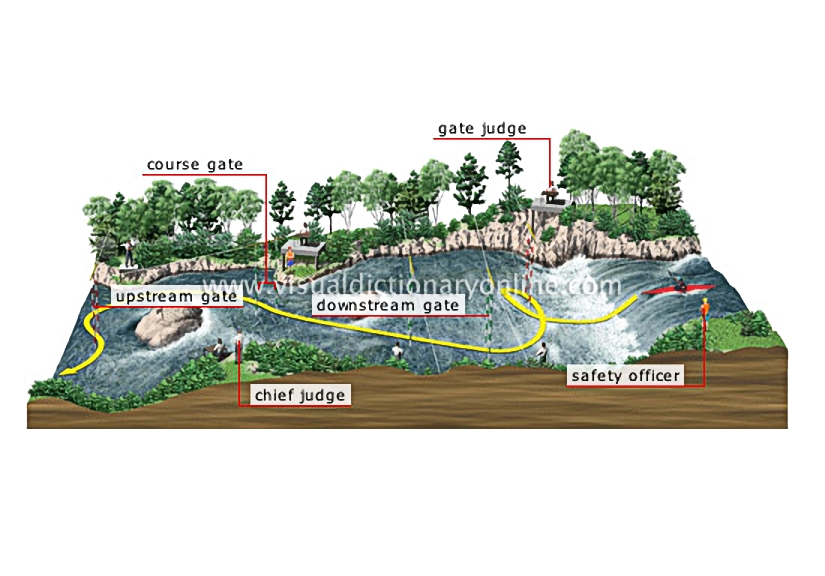
Race against time in turbulent water over a natural or man-made course; the route of the race is marked by 20 to 25 numbered gates.
downstream gate
Gate made of two green poles that is negotiated in the direction of the current.
course gate
Space between two poles through which the competitor must pass; it hangs 6 in above the water from cables stretched from shore to shore.
upstream gate
Gate made with two red poles that must be negotiated against the current; races must have at least six upstream gates.
chief judge
Official who enforces the rules; this individual makes all the final decisions and ensures consistency among the various officials.
safety officer
Official who manages the first aid staff, who are positioned along the course to be ready for emergencies.
gate judge
Official who ensures that the paddler negotiates the gate as required without touching the poles; if the athlete makes a mistake, there is a time penalty.
 previous


