distribution panel

Set of devices forming the junction of the public electricity grid and the electric circuits of a dwelling.
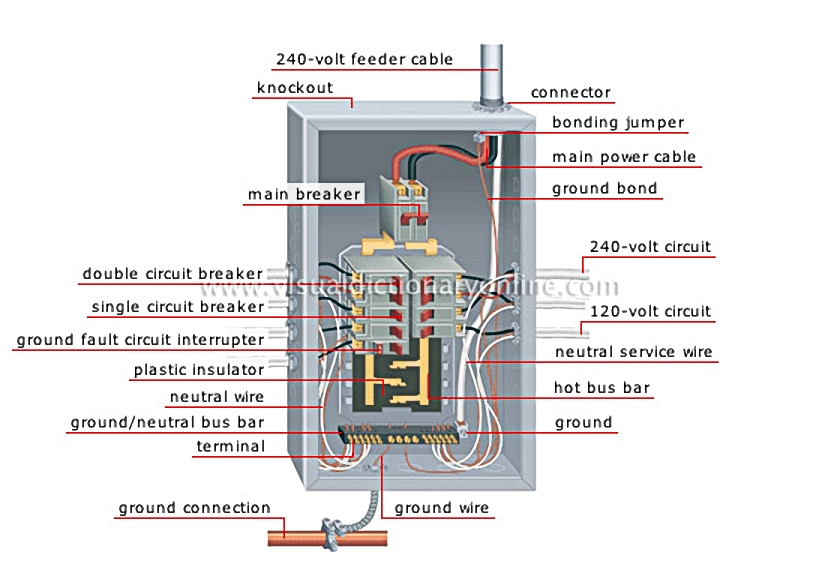
distribution panel 						Metal conductor attached to the ground wire in order to ground the entire circuit.				  							Wire conducting the current from the ground/neutral bus bar to the ground connection in the event of a short circuit.				  							Part of the ground/neutral bus bar to which a neutral wire and the ground wire of a circuit are attached.				  							Receives the current from the neutral grounded wires of the various circuits and conducts them to the neutral service wire and the ground connection.				  							Wire having no electric charge that allows the current to return to the distribution panel and the grid.				  							Device reducing the risk of electric shock in a humid place in the event of an accidental leak of current to the ground.				  							Protection device for a 120-volt circuit that, in the event of overload, is released and thus cuts off electricity to the circuits.				  							Protection device for a 240-volt circuit that, in the event of overload, is released and thus cuts off electricity to the circuits.				  							Mechanism controlling the supply of electricity to the hot bus bars; it allows the current to all the dwelling’s circuits to be cut.				  							Partially cut-out metal part that can be removed if needed in order to attach a supplementary cable to the panel.				  							Screw inserted into the metal box of the panel allowing it to be connected to the neutral hot bus bar.				  							Plate made of nonconductive material preventing the hot bus bars from coming in contact with the back of the panel.				  							Part connecting the neutral hot bus bar that allows the current from the circuits’ neutral wires to be transferred to the neutral service wire.				  							Conductive part of the panel into which the breakers for each circuit are plugged.				  							Composed of one live wire, one neutral wire and one grounded wire; it allows electricity to reach a small appliance or a light.				  							Composed of two lives wires, one neutral wire and one grounded wire; this allows electricity to reach devices requiring a lot of power.				  							Wire having no electric charge that, via the neutral hot bus bar, returns the current from domestic circuits to the grid.				  							Links the bonding jumper to the neutral hot bus bar.				  							Live wire conducting the electric current.				  							Device for screwing the electric-connection conduit to the panel box.				  							Cable consisting of three wires, one neutral and two live, conducting an electric current from the grid to the distribution panel.
See Also


network connection

ground connection

Metal conductor attached to the ground wire in order to ground the entire circuit.

ground wire

Wire conducting the current from the ground/neutral bus bar to the ground connection in the event of a short circuit.

terminal

Part of the ground/neutral bus bar to which a neutral wire and the ground wire of a circuit are attached.

ground/neutral bus bar

Receives the current from the neutral grounded wires of the various circuits and conducts them to the neutral service wire and the ground connection.

neutral wire

Wire having no electric charge that allows the current to return to the distribution panel and the grid.

ground fault circuit interrupter

Device reducing the risk of electric shock in a humid place in the event of an accidental leak of current to the ground.

single circuit breaker

Protection device for a 120-volt circuit that, in the event of overload, is released and thus cuts off electricity to the circuits.

double circuit breaker

Protection device for a 240-volt circuit that, in the event of overload, is released and thus cuts off electricity to the circuits.

main breaker

Mechanism controlling the supply of electricity to the hot bus bars; it allows the current to all the dwelling’s circuits to be cut.

knockout

Partially cut-out metal part that can be removed if needed in order to attach a supplementary cable to the panel.

bonding jumper

Screw inserted into the metal box of the panel allowing it to be connected to the neutral hot bus bar.

plastic insulator

Plate made of nonconductive material preventing the hot bus bars from coming in contact with the back of the panel.

ground

Part connecting the neutral hot bus bar that allows the current from the circuits’ neutral wires to be transferred to the neutral service wire.

hot bus bar

Conductive part of the panel into which the breakers for each circuit are plugged.

120-volt circuit

Composed of one live wire, one neutral wire and one grounded wire; it allows electricity to reach a small appliance or a light.

240-volt circuit

Composed of two lives wires, one neutral wire and one grounded wire; this allows electricity to reach devices requiring a lot of power.

neutral service wire

Wire having no electric charge that, via the neutral hot bus bar, returns the current from domestic circuits to the grid.

ground bond

Links the bonding jumper to the neutral hot bus bar.

main power cable

Live wire conducting the electric current.

connector

Device for screwing the electric-connection conduit to the panel box.

240-volt feeder cable

Cable consisting of three wires, one neutral and two live, conducting an electric current from the grid to the distribution panel.