jig saw

Electric portable saw whose blade has an up-and-down motion; it is used for making straight or curved cuts.
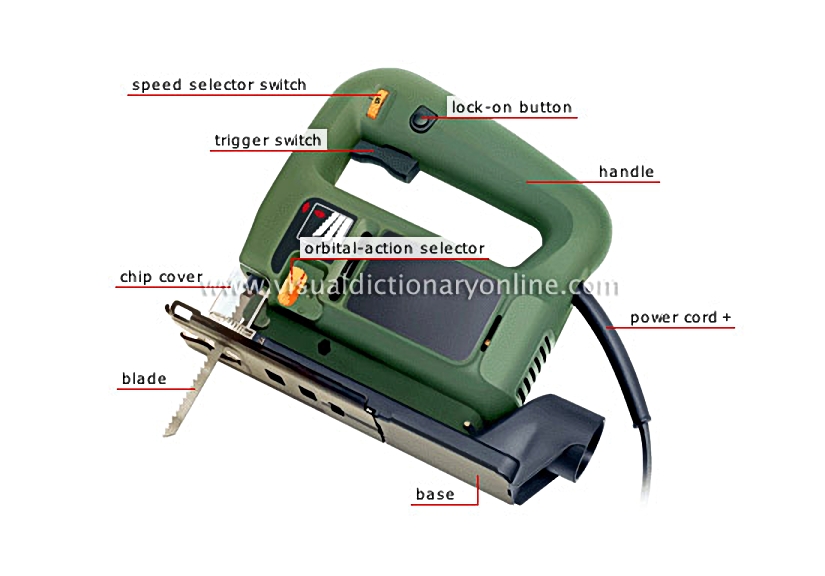
jig saw 						The tool’s support plate, which rests on the surface of the piece to be cut. It can be inclined to make beveled cuts.				  							It moves up and down but can also move from front to back, which increases the efficiency of the sawing.				  							Flexible electric wire housing the leads connecting the appliance to the electric circuit.												Device for controlling the rhythm of the blade’s up-and-down motion.				  							Protective cover preventing sawdust and fragments from flying toward the user or toward the cutting line.				  					  							Connection mechanism for starting or stopping the tool by squeezing with the finger.				  							Device locking the switch in position to keep the saw working continuously during long or complex cuts.				  							Mechanism regulating the pendular motion of the blade. A slight or no pendular motion gives a better finish but takes longer.
See Also


contact devices?[1]

base

The tool’s support plate, which rests on the surface of the piece to be cut. It can be inclined to make beveled cuts.

blade

It moves up and down but can also move from front to back, which increases the efficiency of the sawing.

power cord

Flexible electric wire housing the leads connecting the appliance to the electric circuit.
contact devices [1]
contact devices [1]

speed selector switch

Device for controlling the rhythm of the blade’s up-and-down motion.

chip cover

Protective cover preventing sawdust and fragments from flying toward the user or toward the cutting line.

handle

trigger switch

Connection mechanism for starting or stopping the tool by squeezing with the finger.

lock-on button

Device locking the switch in position to keep the saw working continuously during long or complex cuts.

orbital-action selector

Mechanism regulating the pendular motion of the blade. A slight or no pendular motion gives a better finish but takes longer.