offshore prospecting

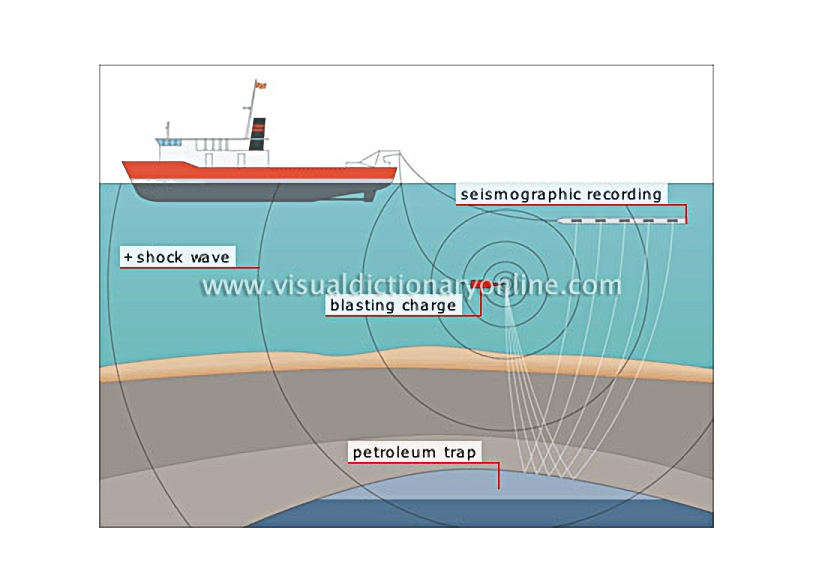
Vibrations from an exploding charge in the sea are used to locate oil deposits; prospecting offshore is more difficult than on land.
offshore prospecting 						Assemblage of porous rocks that contain recoverable oil reserves, which are produced from marine or land deposits.				  							Quantity of explosives (substances capable of discharging high-temperature gases over a very short time period) that produce shock waves when detonated.				  							A recording made using an apparatus called a seismograph; the analysis of its shock wave echoes detects the presence of rock layers that might contain pockets of petroleum or gas.				  							The shock wave spreads and sends back an echo, which varies with the density and depth of the layers of subsoil; with this information, the composition of the subsoil can be determined.

See Also


wave

petroleum trap

Assemblage of porous rocks that contain recoverable oil reserves, which are produced from marine or land deposits.

blasting charge

Quantity of explosives (substances capable of discharging high-temperature gases over a very short time period) that produce shock waves when detonated.

seismographic recording

A recording made using an apparatus called a seismograph; the analysis of its shock wave echoes detects the presence of rock layers that might contain pockets of petroleum or gas.

shock wave

The shock wave spreads and sends back an echo, which varies with the density and depth of the layers of subsoil; with this information, the composition of the subsoil can be determined.
wave
wave