harp

Plucked stringed instrument consisting of strings of various lengths attached to a triangular frame.
harp 						The base where the sound box and the pillar meet.				  							Each of the pieces on which the harp rests.				  							Device that raises the string by a semitone or a full tone.				  							The hollow part of the instrument; it amplifies the sound vibrations produced by the strings.				  							The upper face of the sound box, which receives the vibrations of the strings.				  							Upright that connects the sound box to the neck; its metal rods join the pedals to the mechanism inside the neck.				  							Made of gut, nylon or metal; its vibrations are transferred to the soundboard.				  							Curved section of the harp’s frame.				  							The upper section of the harp; it anchors the tuning pegs and contains a mechanism that changes the pitch of the strings by a semitone.				  							Piece of wood or metal that rolls the end of a string to adjust its tension to obtain the exact note.				  							The top of the pillar.

pedestal

The base where the sound box and the pillar meet.

foot

Each of the pieces on which the harp rests.

pedal

Device that raises the string by a semitone or a full tone.

sound box

The hollow part of the instrument; it amplifies the sound vibrations produced by the strings.

soundboard

The upper face of the sound box, which receives the vibrations of the strings.

pillar

Upright that connects the sound box to the neck; its metal rods join the pedals to the mechanism inside the neck.

string

Made of gut, nylon or metal; its vibrations are transferred to the soundboard.

shoulder

Curved section of the harp’s frame.

neck

The upper section of the harp; it anchors the tuning pegs and contains a mechanism that changes the pitch of the strings by a semitone.

tuning peg

Piece of wood or metal that rolls the end of a string to adjust its tension to obtain the exact note.
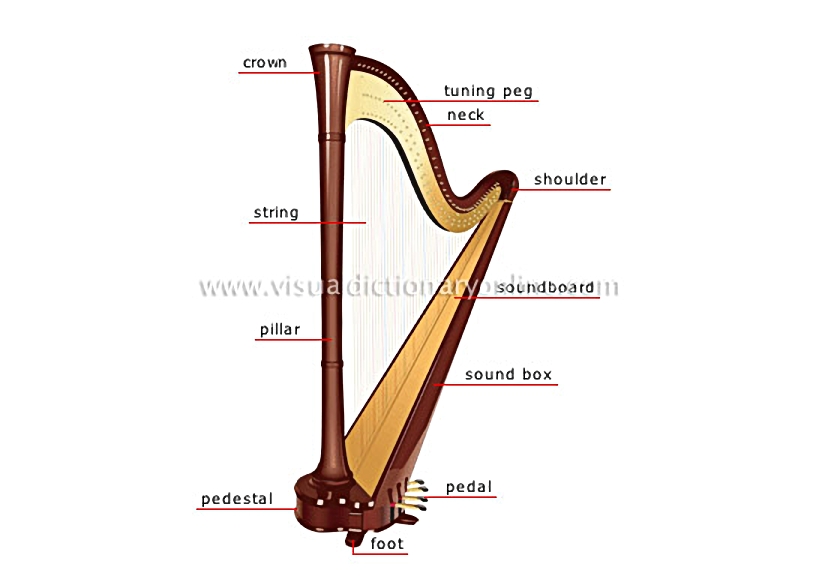
crown

The top of the pillar.