anatomy of a snail

anatomy of a snail 						Genital gland located at the apex of the shell ensuring production of sperm and eggs; the snail has both male and female organs.				  							Channel into which the ovotestis and albumen gland open; it separates into a sperm duct and an egg duct that remain, nonetheless, conjoined.				  							Organ opening into the hermaphroditic duct and secreting a viscous substance, which surrounds the fertilized ovum and contributes to the development of the egg.				  							Sac where sperm accumulate before entering the spermatheca.				  							Male organ of copulation, internal when at rest; it is located on the ventral face of the foot, lateral to the vagina.				  							Canal in the anterior part of the digestive tract; it carries food to the crop.				  							Opening common to the penis and the vagina and located at the side of the head; it allows copulation and entry of the sperm into the copulatory bursa.				  							Organ of the foot located near the mouth; it secretes an adhesive substance that allows the snail to crawl.				  							Tongue bearing numerous small corneous teeth allowing the snail to grasp and tear up food before ingesting it.				  							Anterior cavity of the digestive tract having a jaw and a rough tongue (radula) to graze on plants.				  							Calcareous part located inside the vagina containing the dart with which snails sting one another to achieve arousal before copulation.				  							Large sac located beyond the esophagus, where food is held before being digested in the stomach.				  							Organ located in the buccal cavity; it secretes saliva and enables especially the digestion of food.				  							Pouch formed of a network of blood vessels inside the shell; it ensures respiration and communicates with the outside through an orifice.				  							Muscular organ helping blood to circulate.				  							Organ producing a secretion that contributes to digestion.				  							Section of the digestive tract between the stomach and the anus where absorption of nutrients is carried out and waste is transformed into fecal matter.				  							Pouch discharging into the vagina and housing the sperm used to fertilize the eggs.				  							Organ secreting urine; it eliminates toxic substances from the body.				  							Dilated section of the digestive tract preceding the intestine; it receives food to be digested.				  							Long canal originating in the kidney and carrying urine to the excretory orifice.				  							Male genital duct carrying sperm toward the penis.				  							Movable filament appended to the penis allowing sperm to move about during copulation.				  							Terminal opening of the ureter allowing urine to be evacuated.				  							Terminal orifice of the digestive tract enabling ejection of fecal matter.				  							Female organ of copulation located on the ventral surface of the foot, lateral to the penis.
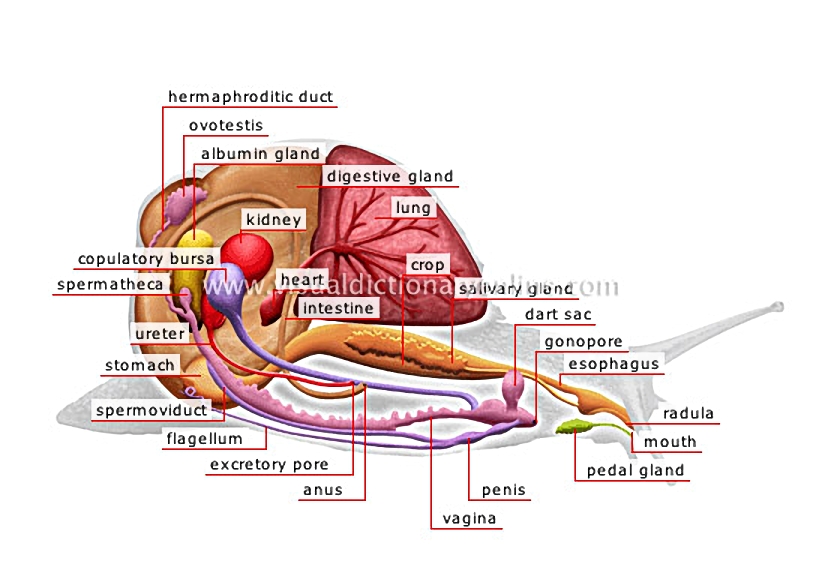
ovotestis

Genital gland located at the apex of the shell ensuring production of sperm and eggs; the snail has both male and female organs.

hermaphroditic duct

Channel into which the ovotestis and albumen gland open; it separates into a sperm duct and an egg duct that remain, nonetheless, conjoined.

albumin gland

Organ opening into the hermaphroditic duct and secreting a viscous substance, which surrounds the fertilized ovum and contributes to the development of the egg.

copulatory bursa

Sac where sperm accumulate before entering the spermatheca.

penis

Male organ of copulation, internal when at rest; it is located on the ventral face of the foot, lateral to the vagina.

esophagus

Canal in the anterior part of the digestive tract; it carries food to the crop.

gonopore

Opening common to the penis and the vagina and located at the side of the head; it allows copulation and entry of the sperm into the copulatory bursa.

pedal gland

Organ of the foot located near the mouth; it secretes an adhesive substance that allows the snail to crawl.

radula

Tongue bearing numerous small corneous teeth allowing the snail to grasp and tear up food before ingesting it.

mouth

Anterior cavity of the digestive tract having a jaw and a rough tongue (radula) to graze on plants.

dart sac

Calcareous part located inside the vagina containing the dart with which snails sting one another to achieve arousal before copulation.

crop

Large sac located beyond the esophagus, where food is held before being digested in the stomach.

salivary gland

Organ located in the buccal cavity; it secretes saliva and enables especially the digestion of food.

lung

Pouch formed of a network of blood vessels inside the shell; it ensures respiration and communicates with the outside through an orifice.

heart

Muscular organ helping blood to circulate.

digestive gland

Organ producing a secretion that contributes to digestion.

intestine

Section of the digestive tract between the stomach and the anus where absorption of nutrients is carried out and waste is transformed into fecal matter.

spermatheca

Pouch discharging into the vagina and housing the sperm used to fertilize the eggs.

kidney

Organ secreting urine; it eliminates toxic substances from the body.

stomach

Dilated section of the digestive tract preceding the intestine; it receives food to be digested.

ureter

Long canal originating in the kidney and carrying urine to the excretory orifice.

spermoviduct

Male genital duct carrying sperm toward the penis.

flagellum

Movable filament appended to the penis allowing sperm to move about during copulation.

excretory pore

Terminal opening of the ureter allowing urine to be evacuated.

anus

Terminal orifice of the digestive tract enabling ejection of fecal matter.

vagina

Female organ of copulation located on the ventral surface of the foot, lateral to the penis.