morphology of a bat

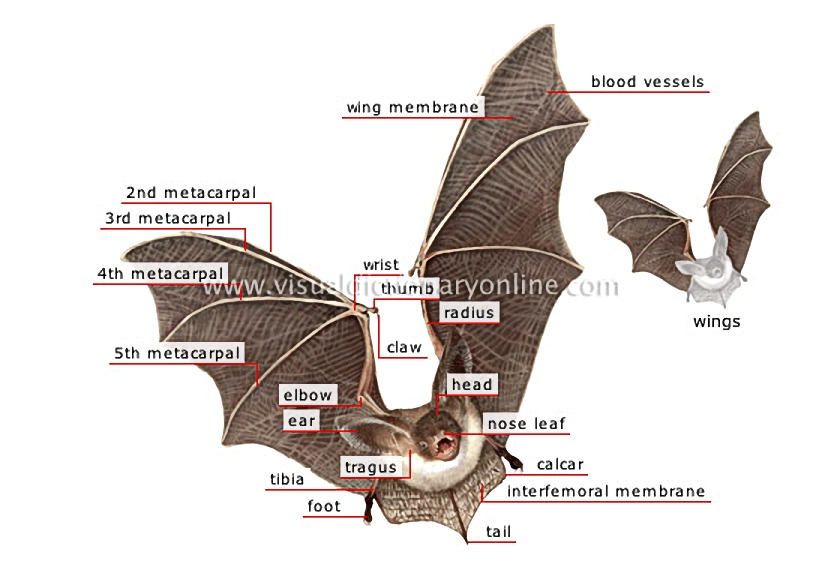
morphology of a bat 						Cartilaginous structure attached to the tarsus and supporting the interfemoral membrane.				  							Long wing bone connecting the carpus to the first phalange of the 2nd finger and supporting the wing membrane.				  							Long wing bone connecting the carpus to the first phalange of the 3rd finger and supporting the wing membrane.				  							Long wing bone connecting the carpus to the first phalange of the 4th finger and supporting the wing membrane.				  							Long wing bone connecting the carpus to the first phalange of the 5th finger and supporting the wing membrane.				  							Stiff pointy corneous structure mainly enabling the bat to attach itself to an object.				  							Terminal end of the foot having five toes pointing toward the back and ending in powerful claws; with it, the bat hangs upside down when at rest.				  							Long and powerful leg bone supporting especially the interfemoral membrane.				  							Terminal appendage of the body supporting especially the interfemoral membrane.				  							Fold of smooth skin between the legs and the tail; it provides stability when the bat is in flight and capturing prey.				  							First digit of the wing; it is short and bears a claw.				  							Long and powerful wing bone supporting the wing membrane.				  							Articulation allowing flexion and extension of the wing.				  							Articulation of the wing to which the digits are attached.				  							External opening of the nasal cavity located above the mouth and having a highly developed olfactory function in particular.				  							Protuberance of the external opening of the ear; it improves receptivity by concentrating beams of incoming sound echoes.				  							Organ of hearing that receives echoes of the sounds the bat emits to locate obstacles and prey.				  							Smooth fold of skin stretching between the digits of the wings and extending to the feet; it is used mainly for flight and thermoregulation.				  							Channels in which blood circulates; they regulate the body’s temperature.				  							Anterior portion of the body containing the main sensory organs and the brain.				  							Appendages of flight comprised of a cutaneous membrane supported by four very long fingers (only the thumb remains free); the bat folds its wings when resting.
See Also


examples of bats

calcar

Cartilaginous structure attached to the tarsus and supporting the interfemoral membrane.

2nd metacarpal

Long wing bone connecting the carpus to the first phalange of the 2nd finger and supporting the wing membrane.

3rd metacarpal

Long wing bone connecting the carpus to the first phalange of the 3rd finger and supporting the wing membrane.

4th metacarpal

Long wing bone connecting the carpus to the first phalange of the 4th finger and supporting the wing membrane.

5th metacarpal

Long wing bone connecting the carpus to the first phalange of the 5th finger and supporting the wing membrane.

claw

Stiff pointy corneous structure mainly enabling the bat to attach itself to an object.

foot

Terminal end of the foot having five toes pointing toward the back and ending in powerful claws; with it, the bat hangs upside down when at rest.

tibia

Long and powerful leg bone supporting especially the interfemoral membrane.

tail

Terminal appendage of the body supporting especially the interfemoral membrane.

interfemoral membrane

Fold of smooth skin between the legs and the tail; it provides stability when the bat is in flight and capturing prey.

thumb

First digit of the wing; it is short and bears a claw.

radius

Long and powerful wing bone supporting the wing membrane.

elbow

Articulation allowing flexion and extension of the wing.

wrist

Articulation of the wing to which the digits are attached.

nose leaf

External opening of the nasal cavity located above the mouth and having a highly developed olfactory function in particular.

tragus

Protuberance of the external opening of the ear; it improves receptivity by concentrating beams of incoming sound echoes.

ear

Organ of hearing that receives echoes of the sounds the bat emits to locate obstacles and prey.

wing membrane

Smooth fold of skin stretching between the digits of the wings and extending to the feet; it is used mainly for flight and thermoregulation.

blood vessels

Channels in which blood circulates; they regulate the body’s temperature.

head

Anterior portion of the body containing the main sensory organs and the brain.

wings

Appendages of flight comprised of a cutaneous membrane supported by four very long fingers (only the thumb remains free); the bat folds its wings when resting.